
“Masters of the Jazz Kazoo” — a short story by Con Chapman

February 4th, 2015

“Masters of the Jazz Kazoo” is a short story by Con Chapman about a man whose goal was to make it in New York’s  cutthroat world of the jazz kazoo!  It is published with the permission of the author.


*

conchapman


Con Chapman is a Boston-area writer, the author of two novels and “The Year of the Gerbil,” a history of the ’78 Red Sox-Yankees pennant race. His writing on jazz has appeared in Punchnel’s and Brilliant Corners, among other publications. He is working on a biography of Johnny Hodges.

His short story Father Kneist, Jazz Priest was published in Jerry Jazz Musician last month

_______________________________


Masters of the Jazz Kazoo

by

Con Chapman


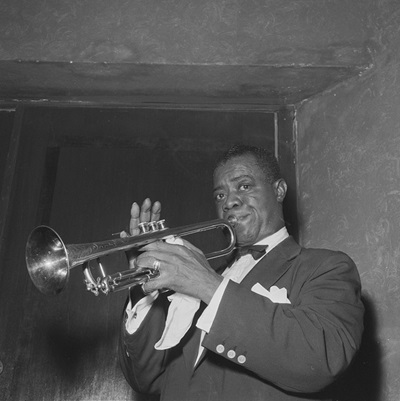
Like all jazz kazoo players, getting to New York City was always my goal. To turn the Sinatra song on its head, until you made it there, you hadn’t made it anywhere.

Yes, I’d cut every kazooist in the Quad Cities, the sub-metropolitan area of Iowa that from the air appears to be what it is full of — squares. Then I’d moved on to Chicago, like Louis Armstrong, where I found a wider audience for my “kool kazoo” stylings. It may be America’s “Second City” (actually third, but who’s counting), but landing on my feet there was like a forbidden double-bounce on a springboard at a municipal pool that launched me as far as my dreams would take me:

New York — the Big Apple. As I stepped onto the concrete at the Port Authority Bus Terminal I thought to myself that I was ready to start playing on jazz’s biggest stage.

Boy was I wrong. My first 52nd Street jam session turned into a humiliating defeat.

“You wanna blow some, man?” the bassist at Mendon’s Home of Happy Feet said as I approached the bandstand.

“Sure,” I said, then nodded at the pianist. “‘Lullaby of Birdland’ in A flat,” I called out confidently. “A one, a two, a one-two-three-four . . .”

But the backup band ignored my tempo and instead took off like a frightened cat at a breakneck speed that only the top dogs of the instrument could have kept up with at their best. My tissue paper slipped and before I knew it, the drummer was sending a cymbal crashing my way, the signal to step down and let somebody else who was better prepared have a chance.

I left the bar with my tail between my legs, got an apartment in Brooklyn, and proceeded to “woodshed” — to practice in isolation by myself — in preparation for a second try at climbing the steep mountain of success in the cutthroat world of the jazz kazoo.

I had chosen a place next to the subway tracks so that neighbors wouldn’t complain about my inept, amateurish honking, and also to hide my shame. Oh, I put on a good front for the folks back home. “Booked for jazz brunch at Sweet Basil,” I told my mom on my weekly phone call. “I may have a shot at opening for Red McKenzie” — the Godfather of the Jazz Comb Kazoo — “at the Village Vanguard, so keep your fingers crossed.”

I took lessons at Juilliard, like Miles Davis, who had overcome similar problems with his embouchure by proper training. He’d almost been fired by Charlie Parker who grew frustrated at the flubbed notes and limited range of the dentist’s son from St. Louis. “Man, you better watch out,” Bird had told Miles. “You keep this shit up and you’ll end up making millions from gloomy, neurasthenic mood music people think is hip, instead of dying young like me.”

At some point a hepcat pulled my coattail. “Say, man, what you messin’ around with the comb-and-tissue-paper bullshit for?” he said just as he was about to nod off from a potent drug cocktail composed of equal parts benzedrine, cocaine and Yoo-Hoo Chocolate Soda.

“What you talkin’ ’bout?” I said, not stinting on the apostrophes, a hipster shibboleth back in those days.

“Don’t you know everbody’s switched to the one-piece metal units?”

Of course I had noticed the trend among the younger players, but I was a traditionalist; how could I look up at the pictures of Bunk Johnson and Buddy Bolden on my wall with a new-fangled contraption they would have laughed out of a New Orleans bordello?

“So — you think the days of the acoustic kazoo are over?”

“That’s for moldy old figs,” my guide to greatness let drop. “You think any self-respecting guitarist would take on Charlie Christian with just an acoustic arch-top hollow body after they heard ‘Gone With What Wind?'”

So I saved up my wages from washing dishes at a Chinese restaurant until I had enough to buy a used Kleschmer “Autocrat” model; fire-engine-red shell, silver “bell” on top. It wasn’t the top-of-the-line, the company’s “President” or “Capitalist” or “Benign Despot” model — one of those higher-priced “‘zoos” would be my reward when I’d earned it by a little success.

The place to start was back where I’d been first been thrown from my horse — Mendon’s Tuesday night jam sessions.

I played it cool, taking a seat at the bar, ordering a ginger ale and Canadian whisky to limber up my throat while still keeping my wits about me. I saw one, two young cats crap out; the guys in the band had no mercy for neophytes from the provinces, and the sad path back to the bus station was a well-traveled one that night.

“Anybody else out there?” the bassist said after a red-headed man with a bow tie and a plaid jacket left the bandstand in tears. It was a challenge more than a question.

“Yeah,” I said as I stood up. “I wanna blow some.”

The guy gave me a once-over. “Haven’t I seen you around here before?” he asked.

“Maybe my identical twin brother Hammersly,” I said slily.

“What you wanna play?” the pianist asked.

“”When I Take My Sugar to Tea,”” I said. “In C#.”

There were subdued murmurs from the cognoscenti down front. That was the signature tune of Alf Trent, a rising kazoo star of the 40’s whose career had tragically been cut short when his instrument was jammed against his soft palate in a late-night collision on the New Jersey Turnpike.

“It’s your funeral,” the bassist said. He nodded at the others and they began to play in the soft swinging tempo you’d expect to hear when Pee Wee Russell soloed.

“Naw, not like that,” I said cutting them off. “More lugubrious.”

“What’d he say?” the pianist asked.

“Lugubrious, he wants it lugubrious,” the drummer replied.

There were stifled snickers among some of the other players in the crowd, but I stuck to my guns. “You guys can laugh now,” I said, “but when every bohemian coed in America has my album in her collection and listens to it while she stares out the window on rainy days and tries to write sensitive poetry . . .”

“Yes?”

“. . . when I’m getting gigs not just at jazz festivals but at student concert series and I’m a freaking cultural icon who gets to sleep with the president of the Arts Forum Entertainer Series who brought me to campus –”

“Yes?”

” . . . then you’ll wish you’d figured out that it don’t mean a thing if it ain’t got an attitude.”

_________


Read Con Chapman’s Short Story
Father Kneist, Jazz Priest
Share this:

One comments on ““Masters of the Jazz Kazoo” — a short story by Con Chapman”

  1. Luminous lugubriousity Con. I was there in spirit(s)…Write some more travails of the wandering kazoo minstrel

Leave a Reply to Philip Hill Cancel reply

Your email address will not be published. Required fields are marked *

Site Archive

Your Support is Appreciated

Jerry Jazz Musician has been commercial-free since its inception in 1999. Your generous donation helps it remain that way. Thanks very much for your kind consideration.

Click here to read about plans for the future of Jerry Jazz Musician.

In this Issue

A collection of poetic responses to the events of 2025...Forty poets describe their experiences with the tumultuous events of 2025, resulting in a remarkable collection of work made up of writers who may differ on what inspired them to participate, but who universally share a desire for their voice to be heard amid a changing America.

The Sunday Poem

”Tuesday, June 24, 2025” by Russell Dupont

The Sunday Poem is published weekly, and strives to include the poet reading their work...

Russell Dupont reads his poem at its conclusion


Click here to read previous editions of The Sunday Poem

Interview

photo by Warren Fowler
Interview with John Gennari, author of The Jazz Barn: Music Inn, the Berkshires, and the Place of Jazz in American Life...The author discusses how in the 1950s the Berkshires – historic home to the likes of Hawthorne, Melville, Wharton, Rockwell, and Tanglewood – became a crucial space for the performance, study, and mainstreaming of jazz, and eventually an epicenter of the genre’s avant-garde.

Poetry

photo by William Gottlieb/Library of Congress
21 jazz poems on the 21st of January, 2026...An ongoing series designed to share the quality of jazz poetry continuously submitted to Jerry Jazz Musician. This edition features poets – several new to readers of this website – writing about their relationship with the music and its historic figures, including Chuck Mangione, John Coltrane, Barney Kessel, Count Basie, Bill Evans, Hubert Laws, and Steve Lacy.

Feature

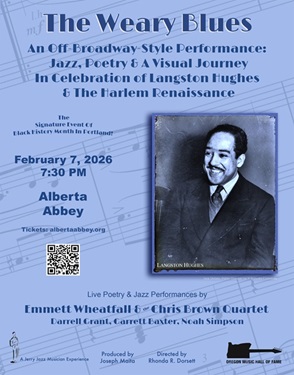
Press Release for “The Weary Blues: Celebrating The Harlem Renaissance and Langston Hughes...I recently wrote about a new endeavor of mine – producing a show in Portland celebrating the poetry of Langston Hughes and the Harlem Renaissance. What follows is the complete press release for the February 7 performance at the Alberta Abbey in Portland, Oregon.

Poetry

photo via Picryl
Three poems…written in the midst of our time...Poets within this community of writers are feeling this moment in time, and writing about it. Here are three examples.

Short Fiction

photo via Freerange/CCO
Short Fiction Contest-winning story #70 – “The Sound of Becoming,” by J.C. Michaels...The story explores the inner life of a young Southeast Asian man as he navigates the tension between Eastern tradition and Western modernity.

Feature

Linnaea Mallette/publicdomainpictures.net
A 2026 jazz poetry calendar...12 individual poets contribute a jazz-themed poem dedicated to a particular month, resulting in a 2026 calendar of jazz poetry that winds through the year with a variety of poetic styles and voices who share their journeys with the music, tying it into the month they were tasked to interpret. Along the way you will encounter the likes of Sonny Stitt, Charles Mingus, Jaco Pastorius, Wynton Kelly, John Coltrane, and Nina Simone.

Poetry

“To Renee Nicole Good, a poet” – a poem by Erren Geraud Kelly

Feature

Boris Yaro, CC BY 4.0, via Wikimedia Commons
“The Bowie Summer” – a personal memory, and how art can fundamentally reshape identity, by G.D. Newton-Wade

Poetry

photo via Shutterstock
“The Music of Lana’i Lookout” – a poem by Robert Alan Felt...The 17th anniversary of president-elect Barack Obama's scattering of his beloved grandmother's ashes is at the center of the poem, and serves as a reminder that moral personal character of leadership is what makes a country great.

Short Fiction

art by Alan Aine
“Skipping Up the Steps Since Six” – a free verse poem by Camille R.E....This narrative, free verse poem – a finalist in the recently concluded 70th Short Fiction Contest – is centered on the sense of isolation a daughter feels as she enters an unorthodox adolescence.
Poetry

Poems on Charlie “Bird” Parker (inspired by a painting by Al Summ) – an ekphrastic poetry collection...A collection of 25 poems inspired by the painting of Charlie Parker by the artist Al Summ.
Community

Letter from the Editor: “A Jerry Jazz Musician Experience”...Sharing a bit of what I’ve been up to of late, and make you aware of a new endeavor of mine…
Poetry

National Archives of Norway, CC BY 4.0 , via Wikimedia Commons
“Wonderful World” – a poem by Dan Thompson

A Letter from the Publisher

The gate at Buchenwald. Photo by Rhonda R Dorsett
War. Remembrance. Walls.
The High Price of Authoritarianism– by editor/publisher Joe Maita
...An essay inspired by my recent experiences witnessing the ceremonies commemorating the 80th anniversary of liberation of several World War II concentration camps in Germany.

Playlist

“Darn! All These Dreams!” – a playlist by Bob Hecht...In this edition, the jazz aficionado Bob Hecht’s 13-song playlist centers on one tune, the great Jimmy Van Heusen/Eddie DeLange standard, “Darn That Dream,” with the first song being a solo musician recording and each successive version adding an instrument.

Poetry

Wikimedia Commons
“Dorothy Parker, an Icon of the Jazz Age” – a poem by Jane McCarthy

Short Fiction

photo via publicdomainimages.net
“Welcome to America” – a short story by John Tures...The story – a short-listed entry in the recently concluded 70th Short Fiction Contest – is a combination of two true linked stories, both of which involved the same person. In one, he’s a witness to history. In the second, he’s an active participant in history, even becoming a hero. But one can’t understand the second until they know the first.

Feature

photo via Wikimedia Commons
Memorable Quotes – Lawrence Ferlinghetti, on a pitiable nation

Short Fiction

“Frusick: Making Sweeter Music” – a short story by J. W. Wood...In the 22nd century, a medical professional takes a bunch of kids to meet one of the last musicians left in England, and has an epiphany when he hears live music for the first time …

Community

Nominations for the Pushcart Prize L (50)...Announcing the six writers nominated for the Pushcart Prize v. L (50), whose work appeared on the web pages of Jerry Jazz Musician or within print anthologies I edited during 2025.

Interview

Interview with Tad Richards, author of Listening to Prestige: Chronicling its Classic Jazz Recordings, 1949 – 1972...Richards discusses his book – a long overdue history of Prestige Records that draws readers into stories involving its visionary founder Bob Weinstock, the classic recording sessions he assembled, and the brilliant jazz musicians whose work on Prestige helped shape the direction of post-war music.

Jazz History Quiz

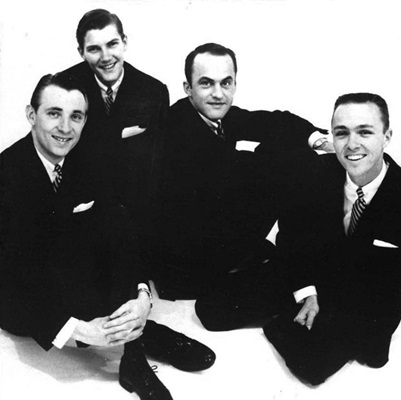
Jazz History Quiz #185...This posthumously-awarded Grammy winning musician/composer was the pianist and arranger for the vocal group The Hi-Lo’s (pictured) in the late 1950’s, and after working with Donald Byrd and Dizzy Gillespie became known for his Latin and bossa nova recordings in the 1960’s. He was also frequently cited by Herbie Hancock as a “major influence.” Who is he?

Poetry

photo via Wikimedia Commons
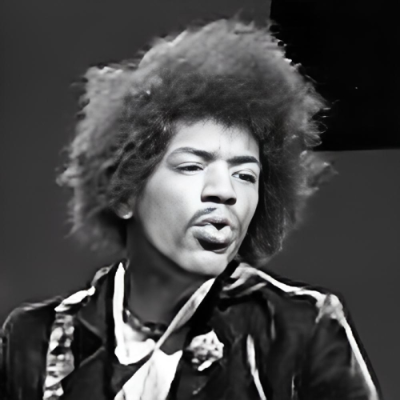
Jimi Hendrix - in four poems

Playlist

A sampling of jazz recordings by artists nominated for 2026 Grammy Awards – a playlist by Martin Mueller...A playlist of 14 songs by the likes of Samara Joy, Brad Mehldau, Dee Dee Bridgewater, Branford Marsalis, the Yellowjackets and other Grammy Award nominees, assembled by Martin Mueller, the former Dean of the New School of Jazz and Contemporary Music in New York.

Poetry

Ukberri.net/Uribe Kosta eta Erandioko agerkari digitala, CC BY 2.0, via Wikimedia Commons
In Memoriam: “Color Wheels” – a poem (for Jack DeJohnette) by Mary O’Melveny

Poetry

“Still Wild” – a collection of poems by Connie Johnson...Connie Johnson’s unique and warm vernacular is the framework in which she reminds readers of the foremost contributors of jazz music, while peeling back the layers on the lesser known and of those who find themselves engaged by it, and affected by it. I have proudly published Connie’s poems for over two years and felt the consistency and excellence of her work deserved this 15 poem showcase.

Feature

photo of Barry Harris by Mirko Caserta
“With Barry Harris at the 11th Street Bar” – a true jazz story by Henry Blanke...The writer - a lifelong admirer of the pianist Barry Harris - recalls a special experience he had with him in 2015

Interview

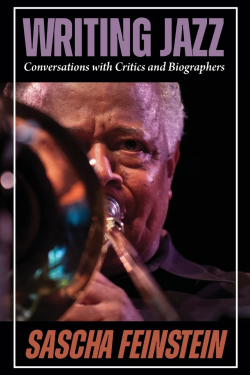
Interview with Sascha Feinstein, author of Writing Jazz: Conversations with Critics and Biographers...The collection of 14 interviews is an impressive and determined effort, one that contributes mightily to the deepening of our understanding for the music’s past impact, and fans optimism for more.

Feature

Trading Fours, with Douglas Cole, No. 27: “California Suite”...Trading Fours with Douglas Cole is an occasional series of the writer’s poetic interpretations of jazz recordings and film. This edition is dedicated to saxophone players and the mood scenes that instrument creates.

Community

photo of Dwike Mitchell/Willie Ruff via Bandcamp
“Tell a Story: Mitchell and Ruff’s Army Service” – an essay by Dale Davis....The author writes about how Dwike Mitchell and Willie Ruff’s U.S. Army service helped them learn to understand the fusion of different musical influences that tell the story of jazz.

Feature

Excerpts from David Rife’s Jazz Fiction: Take Two– Vol. 16: Halloween on Mars? Or…speculative jazz fiction...A substantial number of novels and stories with jazz music as a component of the story have been published over the years, and the scholar David J. Rife has written short essay/reviews of them. In this 16th edition featuring excerpts from his outstanding literary resource, Rife writes about azz-inflected speculative fiction stories (sci-fi, fantasy and horror)

Art

photo by Giovanni Piesco
The Photographs of Giovanni Piesco: Art Farmer and Benny Golson...Beginning in 1990, the noted photographer Giovanni Piesco began taking backstage photographs of many of the great musicians who played in Amsterdam’s Bimhuis, that city’s main jazz venue which is considered one of the finest in the world. Jerry Jazz Musician will occasionally publish portraits of jazz musicians that Giovanni has taken over the years. This edition features the May 10, 1996 photos of the tenor saxophonist, composer and arranger Benny Golson, and the February 13, 1997 photos of trumpet and flugelhorn player Art Farmer.

Community

Community Bookshelf #5...“Community Bookshelf” is a twice-yearly space where writers who have been published on Jerry Jazz Musician can share news about their recently authored books and/or recordings. This edition includes information about books published within the last six months or so (March, 2025 – September, 2025)

Contributing Writers

Click the image to view the writers, poets and artists whose work has been published on Jerry Jazz Musician, and find links to their work

Coming Soon

New poetry collections, Jazz History Quiz, and lots of short fiction; poetry; photography; interviews; playlists; and much more in the works...

Interview Archive

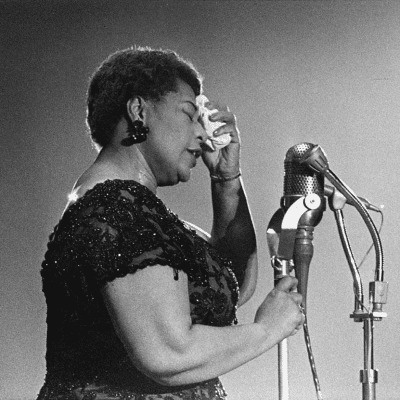
Ella Fitzgerald/IISG, CC BY-SA 2.0 , via Wikimedia Commons
Click to view the complete 25-year archive of Jerry Jazz Musician interviews, including those recently published with Judith Tick on Ella Fitzgerald (pictured),; Laura Flam and Emily Sieu Liebowitz on the Girl Groups of the 60's; Tad Richards on Small Group Swing; Stephanie Stein Crease on Chick Webb; Brent Hayes Edwards on Henry Threadgill; Richard Koloda on Albert Ayler; Glenn Mott on Stanley Crouch; Richard Carlin and Ken Bloom on Eubie Blake; Richard Brent Turner on jazz and Islam; Alyn Shipton on the art of jazz; Shawn Levy on the original queens of standup comedy; Travis Atria on the expatriate trumpeter Arthur Briggs; Kitt Shapiro on her life with her mother, Eartha Kitt; Will Friedwald on Nat King Cole; Wayne Enstice on the drummer Dottie Dodgion; the drummer Joe La Barbera on Bill Evans; Philip Clark on Dave Brubeck; Nicholas Buccola on James Baldwin and William F. Buckley; Ricky Riccardi on Louis Armstrong; Dan Morgenstern and Christian Sands on Erroll Garner; Maria Golia on Ornette Coleman.