
Jack Kerouac and the “Beatnik crap” that cheapened the memories of jazz icons

January 22nd, 2018


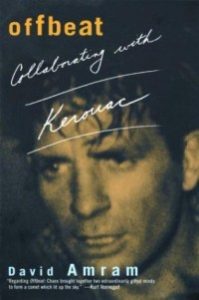
In this short excerpt from David Amram’s 2002 biography Offbeat: Collaborating with Kerouac,  Kerouac talks with Amram about how the “Beatnik crap” that Kerouac and his friends reluctantly represented was “distorting everything,” and “cheapening the memories of Charlie Parker, Dizzy Gillespie, and Thelonious Monk.”  It is an interesting and entertaining view of that era, filled with the vigor, passion, wit and wisdom Kerouac is remembered for.


_____


     In January of 1959, we collaborated with a once-in-a-lifetime group of artists on the film Pull My Daisy.  In addition to appearing in the film as Mezz McGillicudy, the deranged French horn player in the moth-eaten sweater, I composed the entire score for the film and wrote the music for the title song, “Pull My Daisy,” with lyrics by Jack [Kerouac], Neal Cassady, and Allen Ginsberg.

     The idea of making a film based on Jack’s work was easier to talk about than to actually accomplish.  May people felt that the experience of reading On the Road was like watching a film, projected on the screen of your mind, as you devoured the pages of his classic adventure story-poem-novel.  All of his writing, like his spontaneous raps, conjured up kaleidoscopic imagery that made you feel that you were a member of the cast in a great documentary film about the quintessential America we all longed to be part of.  Like most of the high-energy musicians, poets, painters, and assorted dreamers we hung out with, Jack relished every precious moment of each day and night.  He often told me his books were sight and sound journeys, told in the style of a great jazz solo, to be shared by the readers, joining him on his endless odyssey.

     One afternoon in the middle of November, 1958, Jack came over to my sixth floor walk-up apartment at 114 Christopher Street from his house on Gilbert Street in Northport.  “I’ve got an idea for a short film, Davy, a petit flic about a simple afternoon at Neal’s house.  It’s a scene from a play I’d like to write, about what we all mean to one another.  Allen Ginsberg, Gregory Corso, and Peter Orlovsky will play themselves.  They are the psychotic poets who drive Neal’s wife and everyone else crazy.  Larry Rivers is going to be Neal, and you can be Mezz McGillicuddy, the mad French-horn playing optimistic Irish-American nut-case.  It will be a silent film, and I can narrate it after it’s been shot, whild you play the music for me, like a great Charlie Chaplin silent movie.  We can do our part together spontaneously, like we’ve always done, while we’re watching the final edited version.  We can paint a picture.  No one today knows what Beat is about.  They certainly have no idea what I’m about, especially if they read articles about me, where I’m misquoted.  They’re forced to judge me by embittered journalists who gave up their dreams of writing to become slaves to heartless publications run by people who have never read a word I’ve written!  They neglect the fact that I’m referring to the beatitudes, and to the beat of everyone’s ancestral drum that we carry through our lives, from the time we hear our mother’s heartbeat before we are even born.  The Beatnik crap is distorting everything all of us are trying to say.  It’s even distorting history by cheapening the memories of Charlie Parker, Dizzy Gillespie, and Thelonious Monk.  In the forties when I heard them at Minton’s in Harlem, they were wearing berets and horn-rimmed glasses to show their allegiance with Picasso, Jean-Paul Sartre, and the revolutionary artists, because they wanted the same respect shown to them as American musical visionaries.  The Beatnik craze has usurped their dress style, making a joke out of their struggles.  The kids today are brainwashed about this.  They don’t know that bongos are our link to Africa and have religious connotations.  They don’t know about Afro-Cuban influences on American music, or Chano Pozo or Machito’s contributions to the history of jazz right here in New York City.  They’re just kids, being guided by money-grubbing merchants, who no longer read books or sit in Bhodovista silence, digging the sounds of the last genius pioneers of bop.  Allen accuses me of being stuck in the past.  I tell him I only want to see this great chapter of history I witnessed recorded.  What’s new comes from what’s old.  And if it’s of lasting value, it stays new forever. 

     “Our little movie, notre petit flic, can hip-a-fy these kids to the ancient happenings of a few years ago. They can see all of us, now dismissed as passe pioneers of the Beat Generation as regular human beings and fellow artists, spending a silly afternoon together in a tete-a-tete, till Neal’s wife can’t stand our mooching and freeloading anymore and throws us all out of her apartment so that she, Neal, and the children can have a few family moments of tranquility.  Ahh.  Ca ne fait rien.  Let’s go to Washington Square Park and see if we can meet a gum-chewing chess-master genius and invite some young gals up to your pad.  You can cook them a Hector Berlioz-style omelet of leftovers with eggs, and I’ll recite them notes from y latest tome.”

     Jack and I strolled over to the Park.  Through the brisk November streets I told him about my new piece for string orchestra, Autobiography for Strings, which was going to be premiered in June of 1959 by Maurice Peress at a concert at New York University a few blocks away from where we were walking in the Village.

     “It was inspired by what we have done together, combining the spontaneous and the formal,” I said.  It’s a one-movement piece, using the sonata allegro form, with every note written out.  I use a lot of jazz harmonies, walking bass lines, and ideas that I’ve made up on the spot as a player, ideas that are never used by composers in a string orchestra composition.  It’s not elevator music or commercial shlock-shmaltz Broadway trash.  I’m trying to create a piece of music based on the real thing, so orchestral string players can fell that spirit of what it was like for me to play with Mingus and Clifford Brown and Sonny Rollins, Bill Evans, Dizzy, and Monk.”

     “Stick to your guns, Davey,” said Jack.  “Do it right and follow your heart.  Otherwise the ghosts of Bartok, Gershwin, Schubert, and Charlie Parker will creep beneath your sheets like crawling cockroaches in the silence of the night and make you give penance and recite Hail Marys as they confront you in your petit chateau, sliding on the linoleum between mounds of pizza crusts and tortured socks.”


*

Excerpted from Offbeat:  Collaborating with Kerouac

By

David Amram
 

Click here to read my 2002 interview with David Amram


Amram talks about the making of his film, Pull My Daisy
 

Share this:

2 comments on “Jack Kerouac and the “Beatnik crap” that cheapened the memories of jazz icons”

  1. …am soooo glad I found your web site…met Amram through pal, Janine Santana, at “Dazzle”, a jazz joint in Denver. I’m a guitar-picker, trying to expand my horizons (it never ends) and just this one effort has helped. Looking forward to more. merci beaucoup[….Pierre Ardans

  2. I constantly read Kerouac in high school. Never met him, but I did meet Allen Ginsberg at a party around 1970. Good times!

Comment on this article:

Your email address will not be published. Required fields are marked *

Site Archive

Your Support is Appreciated

Jerry Jazz Musician has been commercial-free since its inception in 1999. Your generous donation helps it remain that way. Thanks very much for your kind consideration.

Click here to read about plans for the future of Jerry Jazz Musician.

In this Issue

A collection of poetic responses to the events of 2025...Forty poets describe their experiences with the tumultuous events of 2025, resulting in a remarkable collection of work made up of writers who may differ on what inspired them to participate, but who universally share a desire for their voice to be heard amid a changing America.

Poetry

photo by William Gottlieb/design by Rhonda R. Dorsett
21 jazz poems on the 21st of November, 2025...An ongoing series designed to share the quality of jazz poetry continuously submitted to Jerry Jazz Musician. This edition features poems communicating the emotional appeal of jazz music, as well as nods to the likes of Miles Davis, Regina Carter, Maynard Ferguson, Ornette Coleman, and Max Roach.

The Sunday Poem

Wojciech Soporek, CC BY 3.0 , via Wikimedia Commons

”Pyramids” by John Menaghan

The Sunday Poem is published weekly, and strives to include the poet reading their work...

John Menaghan reads his poem at its conclusion


Click here to read previous editions of The Sunday Poem

Feature

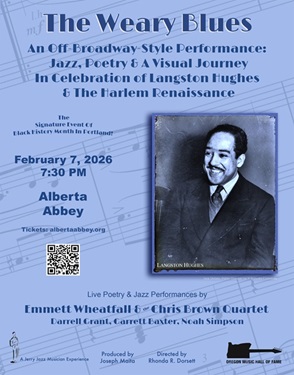
Press Release for “The Weary Blues: Celebrating The Harlem Renaissance and Langston Hughes...I recently wrote about a new endeavor of mine – producing a show in Portland celebrating the poetry of Langston Hughes and the Harlem Renaissance. What follows is the complete press release for the February 7 performance at the Alberta Abbey in Portland, Oregon.

Short Fiction

photo via Freerange/CCO
Short Fiction Contest-winning story #70 – “The Sound of Becoming,” by J.C. Michaels...The story explores the inner life of a young Southeast Asian man as he navigates the tension between Eastern tradition and Western modernity.

Feature

Linnaea Mallette/publicdomainpictures.net
A 2026 jazz poetry calendar...12 individual poets contribute a jazz-themed poem dedicated to a particular month, resulting in a 2026 calendar of jazz poetry that winds through the year with a variety of poetic styles and voices who share their journeys with the music, tying it into the month they were tasked to interpret. Along the way you will encounter the likes of Sonny Stitt, Charles Mingus, Jaco Pastorius, Wynton Kelly, John Coltrane, and Nina Simone.

Poetry

“To Renee Nicole Good, a poet” – a poem by Erren Geraud Kelly

Poetry

photo via Shutterstock
“The Music of Lana’i Lookout” – a poem by Robert Alan Felt...The 17th anniversary of president-elect Barack Obama's scattering of his beloved grandmother's ashes is at the center of the poem, and serves as a reminder that moral personal character of leadership is what makes a country great.

Poetry

Poems on Charlie “Bird” Parker (inspired by a painting by Al Summ) – an ekphrastic poetry collection...A collection of 25 poems inspired by the painting of Charlie Parker by the artist Al Summ.

Community

Letter from the Editor: “A Jerry Jazz Musician Experience”...Sharing a bit of what I’ve been up to of late, and make you aware of a new endeavor of mine…

Poetry

National Archives of Norway, CC BY 4.0 , via Wikimedia Commons
“Wonderful World” – a poem by Dan Thompson

A Letter from the Publisher

The gate at Buchenwald. Photo by Rhonda R Dorsett
War. Remembrance. Walls.
The High Price of Authoritarianism– by editor/publisher Joe Maita
...An essay inspired by my recent experiences witnessing the ceremonies commemorating the 80th anniversary of liberation of several World War II concentration camps in Germany.

Poetry

Wikimedia Commons
“Dorothy Parker, an Icon of the Jazz Age” – a poem by Jane McCarthy

Short Fiction

photo via publicdomainimages.net
“Welcome to America” – a short story by John Tures...The story – a short-listed entry in the recently concluded 70th Short Fiction Contest – is a combination of two true linked stories, both of which involved the same person. In one, he’s a witness to history. In the second, he’s an active participant in history, even becoming a hero. But one can’t understand the second until they know the first.

Feature

photo via Wikimedia Commons
Memorable Quotes – Lawrence Ferlinghetti, on a pitiable nation

Short Fiction

“Frusick: Making Sweeter Music” – a short story by J. W. Wood...In the 22nd century, a medical professional takes a bunch of kids to meet one of the last musicians left in England, and has an epiphany when he hears live music for the first time …

Community

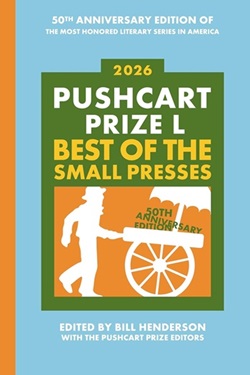
Nominations for the Pushcart Prize L (50)...Announcing the six writers nominated for the Pushcart Prize v. L (50), whose work appeared on the web pages of Jerry Jazz Musician or within print anthologies I edited during 2025.

Interview

Interview with Tad Richards, author of Listening to Prestige: Chronicling its Classic Jazz Recordings, 1949 – 1972...Richards discusses his book – a long overdue history of Prestige Records that draws readers into stories involving its visionary founder Bob Weinstock, the classic recording sessions he assembled, and the brilliant jazz musicians whose work on Prestige helped shape the direction of post-war music.

Poetry

"Swing Landscape" by Stuart Davis
“Swing Landscape” – a poem by Kenneth Boyd....Kenneth Boyd writes poetry based on jazz paintings. “Swing Landscape” is written for a Stuart Davis painting of the same name.

Playlist

“A Perfect 10” – a playlist of tentets by Bob Hecht...Bob adds another instrument to his progressive playlist feature, and shares what a variety of arrangers have been able to accomplish writing for a tentet.

Jazz History Quiz

Jazz History Quiz #185...This posthumously-awarded Grammy winning musician/composer was the pianist and arranger for the vocal group The Hi-Lo’s (pictured) in the late 1950’s, and after working with Donald Byrd and Dizzy Gillespie became known for his Latin and bossa nova recordings in the 1960’s. He was also frequently cited by Herbie Hancock as a “major influence.” Who is he?

Poetry

photo via Wikimedia Commons
Jimi Hendrix - in four poems

Playlist

A sampling of jazz recordings by artists nominated for 2026 Grammy Awards – a playlist by Martin Mueller...A playlist of 14 songs by the likes of Samara Joy, Brad Mehldau, Dee Dee Bridgewater, Branford Marsalis, the Yellowjackets and other Grammy Award nominees, assembled by Martin Mueller, the former Dean of the New School of Jazz and Contemporary Music in New York.

Poetry

Ukberri.net/Uribe Kosta eta Erandioko agerkari digitala, CC BY 2.0, via Wikimedia Commons
In Memoriam: “Color Wheels” – a poem (for Jack DeJohnette) by Mary O’Melveny

Essay

“Escalator Over the Hill – Then and Now” – by Joel Lewis...Remembering the essential 1971 album by Carla Bley/Paul Haines, inspired by the writer’s experience attending the New School’s recent performance of it

Poetry

“Still Wild” – a collection of poems by Connie Johnson...Connie Johnson’s unique and warm vernacular is the framework in which she reminds readers of the foremost contributors of jazz music, while peeling back the layers on the lesser known and of those who find themselves engaged by it, and affected by it. I have proudly published Connie’s poems for over two years and felt the consistency and excellence of her work deserved this 15 poem showcase.

Feature

photo of Barry Harris by Mirko Caserta
“With Barry Harris at the 11th Street Bar” – a true jazz story by Henry Blanke...The writer - a lifelong admirer of the pianist Barry Harris - recalls a special experience he had with him in 2015

Interview

Interview with Sascha Feinstein, author of Writing Jazz: Conversations with Critics and Biographers...The collection of 14 interviews is an impressive and determined effort, one that contributes mightily to the deepening of our understanding for the music’s past impact, and fans optimism for more.

Feature

Trading Fours, with Douglas Cole, No. 27: “California Suite”...Trading Fours with Douglas Cole is an occasional series of the writer’s poetic interpretations of jazz recordings and film. This edition is dedicated to saxophone players and the mood scenes that instrument creates.

Essay

“J.A. Rogers’ ‘Jazz at Home’: A Centennial Reflection on Jazz Representation Through the Lens of Stormy Weather and Everyday Life – an essay by Jasmine M. Taylor...The writer opines that jazz continues to survive – 100 years after J.A. Rogers’ own essay that highlighted the artistic freedom of jazz – and has “become a fundamental core in American culture and modern Americanism; not solely because of its artistic craftsmanship, but because of the spirit that jazz music embodies.”

Community

photo of Dwike Mitchell/Willie Ruff via Bandcamp
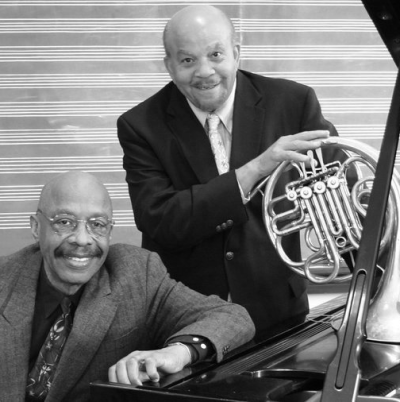
“Tell a Story: Mitchell and Ruff’s Army Service” – an essay by Dale Davis....The author writes about how Dwike Mitchell and Willie Ruff’s U.S. Army service helped them learn to understand the fusion of different musical influences that tell the story of jazz.

Feature

Excerpts from David Rife’s Jazz Fiction: Take Two– Vol. 16: Halloween on Mars? Or…speculative jazz fiction...A substantial number of novels and stories with jazz music as a component of the story have been published over the years, and the scholar David J. Rife has written short essay/reviews of them. In this 16th edition featuring excerpts from his outstanding literary resource, Rife writes about azz-inflected speculative fiction stories (sci-fi, fantasy and horror)
Poetry
“With Ease in Mind” – poems by Terrance Underwood...It’s no secret that I’m a fan of Terrance Underwood’s poetry. I am also quite jealous of his ease with words, and of his graceful way of living, which shows up in this collection of 12 poems.

Poetry

What is This Path – a collection of poems by Michael L. Newell...A contributor of significance to Jerry Jazz Musician, the poet Michael L. Newell shares poems he has written since being diagnosed with a concerning illness.

Art

photo by Giovanni Piesco
The Photographs of Giovanni Piesco: Art Farmer and Benny Golson...Beginning in 1990, the noted photographer Giovanni Piesco began taking backstage photographs of many of the great musicians who played in Amsterdam’s Bimhuis, that city’s main jazz venue which is considered one of the finest in the world. Jerry Jazz Musician will occasionally publish portraits of jazz musicians that Giovanni has taken over the years. This edition features the May 10, 1996 photos of the tenor saxophonist, composer and arranger Benny Golson, and the February 13, 1997 photos of trumpet and flugelhorn player Art Farmer.

Community

Community Bookshelf #5...“Community Bookshelf” is a twice-yearly space where writers who have been published on Jerry Jazz Musician can share news about their recently authored books and/or recordings. This edition includes information about books published within the last six months or so (March, 2025 – September, 2025)

Contributing Writers

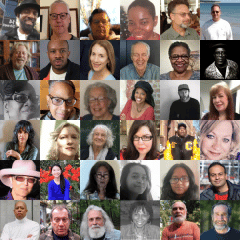
Click the image to view the writers, poets and artists whose work has been published on Jerry Jazz Musician, and find links to their work

Coming Soon

Interview with John Gennari, author of The Jazz Barn:  Music Inn, the Berkshires, and the Place of Jazz in American Life; Also, a new Jazz History Quiz, and lots of short fiction; poetry; photography; interviews; playlists; and much more in the works...

Interview Archive

Ella Fitzgerald/IISG, CC BY-SA 2.0 , via Wikimedia Commons
Click to view the complete 25-year archive of Jerry Jazz Musician interviews, including those recently published with Judith Tick on Ella Fitzgerald (pictured),; Laura Flam and Emily Sieu Liebowitz on the Girl Groups of the 60's; Tad Richards on Small Group Swing; Stephanie Stein Crease on Chick Webb; Brent Hayes Edwards on Henry Threadgill; Richard Koloda on Albert Ayler; Glenn Mott on Stanley Crouch; Richard Carlin and Ken Bloom on Eubie Blake; Richard Brent Turner on jazz and Islam; Alyn Shipton on the art of jazz; Shawn Levy on the original queens of standup comedy; Travis Atria on the expatriate trumpeter Arthur Briggs; Kitt Shapiro on her life with her mother, Eartha Kitt; Will Friedwald on Nat King Cole; Wayne Enstice on the drummer Dottie Dodgion; the drummer Joe La Barbera on Bill Evans; Philip Clark on Dave Brubeck; Nicholas Buccola on James Baldwin and William F. Buckley; Ricky Riccardi on Louis Armstrong; Dan Morgenstern and Christian Sands on Erroll Garner; Maria Golia on Ornette Coleman.