
_____
While the romantic notion is to imagine that the music coming out of the clubs lining New York’s 52nd Street during the 1940’s was universally applauded, we of course know that is not the case. In an example of this dissent, consider the words of Los Angeleno Norman Granz, who told Downbeat this during his April, 1945 visit to New York:
“Jazz in New York stinks! Even the drummers on 52nd St. sound like Dizzy Gillespie!”
“I can’t tell you how disappointed I am in the quality of music here. We keep getting great reports out west about the renaissance of jazz along 52nd St. but I’d like to know where it is. Literally, there isn’t one trumpet player in any of the clubs with the exception of ‘Lips’ Page and he was blowing a mellophone the night I caught him. Maybe Gillespie was great but the ‘advanced’ group that Charlie Parker is fronting at the Three Deuces doesn’t knock me out. It’s too rigid and repetitive. Ben Webster wasn’t playing anything when I heard him. And Billie Holiday…I’m sorry!
“I’ve heard two good things in the three weeks I’ve been in town. One was Woody Herman’s band which is just as sensational as everyone’s been saying it is. The other was Erroll Garner, whose piano is really wonderful. And I almost forgot, there’s a young guitarist named Bill De Arango who plays fine.
“Otherwise, the West Coast may not be the happy hunting ground of modern jazz, but, brother, neither is 52nd St. these days!”
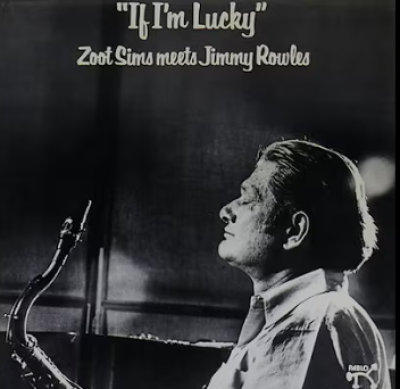
Granz eventually became a key figure in the history of jazz music as a founder of record labels – among them Clef, Verve and Pablo — an impresario whose Jazz at the Philharmonic ensembles featured many of the musicians he chided in this Downbeat piece, and most notably, became famous for breaking down racial barriers in auditoriums in the Jim Crow South. The writer Nat Hentoff called Granz “a promoter of civil rights as much as jazz.”
We all know what became of the artists Granz criticized in this piece – Charlie Parker, Ben Webster, Billie Holiday, Dizzy Gillespie – all of whom either recorded for Granz or toured with the JATP. As for the “fine” playing guitarist Bill De Arango, while in New York he played with the likes of Don Byas and Webster, and recorded with Bird, Dizzy and Sarah Vaughan. In 1947 he returned to his native Cleveland, where he ran a record store, performed in local clubs, managed the rock and roll band Henry Tree, and recorded occasionally with the likes of Kenny Werner and Joe Lovano. He died in 2005.