
.
.
“Armed Delilahs,” a short story by Amadea Tanner, was a short-listed entry in our recently concluded 62nd Short Fiction Contest, and is published with the consent of the author.
.
.
___
.
.
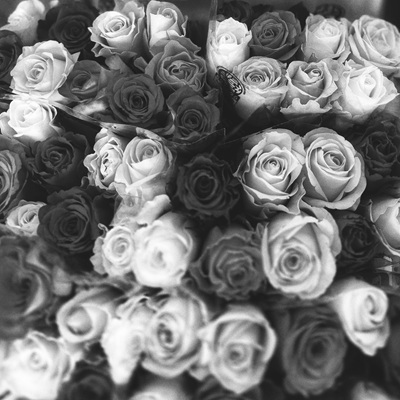
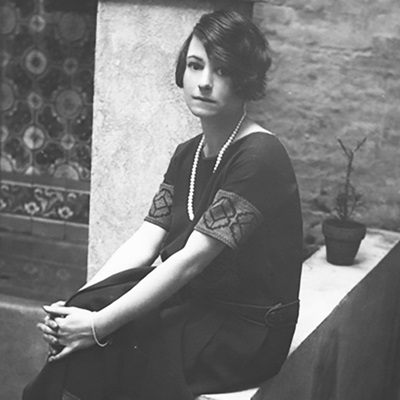
photo via Etsy/Mad Girl Retro
.
Armed Delilahs
by Amadea Tanner
.
…..Lulu Caillier had been best friends and neighbors with Joséphine Thibaut since the beginning of time, but everything changed when Helen Hogue came to stay with the family. She was the daughter of Monsieur Caillier’s trusted business associate in New York, and one of those accomplished demoiselles of the nouveau riche intent on disruption in any form she could actively pursue.
…..The year was 1939, and Helen planned to live with the Cailliers in Paris for two semesters while she attended university in the city. She had arrived pretending to be the paragon of demure respectability, but quickly embraced a new identity while overseas. The French pronounced her name as “Ellen,” which she found to be enough of a distinction that she could happily tarnish Ellen’s reputation without harming Helen’s. She soon made a habit of bickering with Lulu’s older brother, Etienne, began skipping her university studies in favor of political rendezvous, and brought Lulu with her to parties, but most often to jazz clubs which, though they played American music, were venues forbidden to Helen back home.
…..There was no more time for Joséphine when Lulu spent her days under the influence of l’Américaine. All the fanciful schoolgirl notions the two had once shared seemed childish and insignificant when Helen, au contraire, offered the wisdom of her transatlantic perspective.
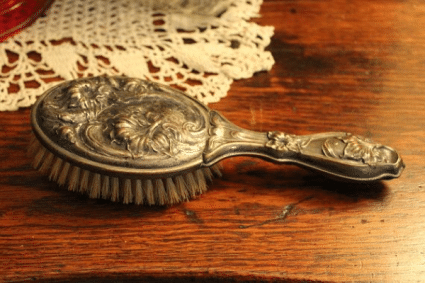
…..On nights when they weren’t out on the town, Helen and Lulu stayed up late talking in their shared bedroom, where Helen would sit at the dressing table meticulously running a silver-plated hairbrush through her long auburn locks. The act of brushing her hair into strands of silk was as mesmerizing as the tales she regaled of democracy and how the women of America had starved themselves for the right to vote.
…..“That’s why it’s called suffrage,” Helen had explained, talking to Lulu through her reflection in the mirror. “Nothing worth having is won without suffering.” Then she turned to Lulu, a pensive sparkle in her eyes, “But you should know that even better than me. How many revolutions have the French had?”
…..Suffering was a favorite topic of Helen’s. She said she’d grown up with a silver spoon in her mouth—an idiomatic expression Lulu never understood completely—which was why Helen had to seek out her own forms of suffering for beauty, for fashion, for love. These were still only bourgeois problems, Helen lamented, but that was life. She would sigh, “C’est la vie.”
…..At age twenty, Helen seemed impossibly wise to Lulu’s mere sixteen years. It was from Helen that Lulu learned everything was political. If you couldn’t use your circumstances as a means of protesting the institution, then you could at least use your body. Women had been doing so for decades already. Rising hemlines, dropped waistlines, strategic makeup, provocative coiffures, it was all about symbolism, Helen explained. In that regard, she believed the oppressed had much more power than the oppressors, if only they could rise up and use it.
…..Joséphine warned Lulu that Helen was all talk and one of those extremists whose opinions were powerful to compensate for a lack of action. But Joséphine, in the absence of Lulu’s company, had become fairly political herself as an avid picketer for women’s right to vote in France, a fight raging on long after their democratic cousines across the Atlantic had won theirs. Lulu always figured Joséphine was jealous of Helen, who had stolen the attention of both Caillier children with her glamour and passion. Eventually Joséphine stopped coming around at all. She disliked how Lulu had become too américanisée.
…..When murmurs of war first appeared in the papers and radio broadcasts, this news scared Lulu, but it got Helen excited. It meant people were finally rising up, she declared, boasting in her customary carefree swagger that she had been saying this whole time the only way to achieve change was to fight for it. Her passionate stance on this topic inspired even more bickering with Etienne.
…..“You can preach about fighting,” he would protest, “but you’re not the one who has to go out there and die for the cause.”
…..“I wish to death I was,” she would reply. “If someone gave me that power, I’d do something with it. Don’t you think I want to fight?”
…..But she wasn’t one of those young women who wished she were a boy so that she might be able to do more. She told Lulu all the time that she was glad to be born a woman. It meant that even with her silver spoon, she’d have to work hard to earn what she wanted most, and that way, it would mean more. She insisted there were still abundant female injustices that had spiraled into more insidious laws and loopholes. She said during one of her dressing table diatribes that it was empowering to feel wronged.
…..But there were more pressing wrongs described in the news every day. Hearing about what was happening a thousand miles east got Helen so vehement she discussed it with the passion of a woman in love.
…..Her verve only amplified after her parents wrote in great distress, demanding that Helen return home before the situation on the continent grew “dire.” Helen ignored the letter, explaining to Lulu that the situation had always been dire. It was only now people were going to do something about it, and she wasn’t going to miss history in the making.
…..But then her father, Mr. Hogue, showed up to bring Helen home. He appeared only briefly, a rotund industrialist brandishing the largest, fattest cigarette Lulu had ever seen. He spoke for a while with Lulu’s father, giving Helen time to pack and say goodbyes. Shortly before leaving, Helen gifted Lulu her silver-plated hairbrush and confessed that even her freedom was relative. She didn’t want to leave, she didn’t want to be an ocean away from where everything was happening, but what could she do?
…..“C’est la guerre,” Helen laughed, finally understanding what that strange Gallicism meant. It couldn’t be helped. That was war.
…..It wasn’t until after they departed that Lulu learned Mr. Hogue had invited her to travel with them back to New York, where she could stay while the “situation in Europe” played out. Lulu could not understand why her father had refused. Monsieur Caillier simply stated that Lulu had been raised to be proud and law-abiding, and the last thing Paris—moreover France, and in fact the whole of Europe—needed was for its citizens to lose faith in the principles they had spent centuries fighting for. Lulu could not forsake her country.
…..But Lulu didn’t care if the war reached them or not. She only wanted to stay with Helen, which was why Helen’s parting gift became Lulu’s most prized possession. Each night she spent an hour at the dressing table running the brush through her hair just as Helen had done, remembering all the secrets Helen had confided in her, pretending to be Helen sometimes. It was for this reason that Lulu kept her hair long even after the city was invaded and barbershop decrees pressured citizens to cut their tresses. Cutting her hair seemed like a betrayal of Helen, so Lulu grew it out as a tribute.
…..She hadn’t intended to become part of a movement. If keeping her hair long was also an act of rebellion, then it was merely against her father’s callous patriotism. It was more satisfying to see his frustration at her nonconformity than it was to deny the Vichy government another head of hair to be woven into a passable sweater.
…..Lulu felt even more like Helen now that hair itself had become political for the first time in two decades. The last time had been much more celebratory, however, when a generation of garçonnes bobbed their tresses and flitted about the streets of Paris in blissful androgyny. That was also when jazz first took the city by storm. Now the jazz had gone underground, and the same people who had once scorned young women lopping off their locks now side-eyed any girl whose hair surpassed her shoulders.
…..There were other girls like Lulu—boys too—who kept their hair long and wore it proudly. When Lulu got whistles and nods of approval from these other youths in passing, she started to feel for the first time in her life as though she were a part of something greater. Eventually these greetings turned into invitations, and when Lulu finally accepted one, she found herself on the inside of an illicit group of deviants at a secret jazz venue in the Latin Quarter. Everyone there wore long hair and extravagant clothing in protest of wartime restrictions. They called themselves the zazou, danced entire nights away, and declared that under the Occupation, jazz was the next closest thing to freedom.
…..They showed her how to dance to swing (a rejection of the oppressor), how to dress with panache (beauty defied horror), and how to pile her hair high on her head in the zazou style (resistance would be fascism’s defeat). Lulu thought most of them arrogant and self-righteous, but their zeal was infectious. She went out with them every night because it felt good to laugh, because she looked like she belonged, and because she thought Helen would be proud of her joining in the talk of resistance and revolt.
…..The zazous spoke with anger and passion, but they danced with joyous abandon. When Lulu asked why everyone was always so happy, Jean-Luc, one of their leaders, laughed out loud.
…..“So long as we have our joy, they haven’t beat us,” he explained. “Having fun is part of the fight.”
…..But they started plenty of fights too. They boasted in the streets, provoked sympathizers, laughed in the faces of Nazi officers, and picked fights with the Jeunesse Populaire Française—fascist French youths easily recognizable in their blue uniforms. It seemed so right that fun should be the antidote to misery, that indulgence was the countermeasure for scarcity, that new should triumph against old, that right was so distinct from wrong. There was no in between. If the young minds of Paris were educated, they were zazou or they were traitors. All the rest were ignorant, or cowards.
…..Lulu was disheartened to learn that Joséphine was one of the traitors. Though Joséphine had not outwardly sided with the enemy, she took the enemy’s side when she brought one into her bed. “C’est l’amour,” Joséphine had said, only able to spew clichés as excuses after Lulu spied Joséphine with her officer. She professed that love knew no boundaries, that she had come to see things in a different light. But Lulu could only look at Joséphine with pity. Her friend’s romantic inclinations foretold doom, Lulu thought, if Joséphine could not understand she had become the means to a bitter end.
…..In her anger, Lulu pitched the conundrum to the zazou: should all collaborators be treated with the same disdain? Her compatriots insisted that all collaboration was betrayal, no matter the means. Right and wrong had never been cast into such sharp relief.
…..Lulu didn’t join the zazou who picked fights with the blue uniforms, but she sat in on plenty of meetings during which they plotted their attacks. It had become a sort of civil war amongst the jeunesse, a gang war between cohorts, a pastiche of the real fight on the front. The zazou fought for ideals, a true liberté, égalité, fraternité. But the blue uniforms made an example with symbolism. If the zazous’ rebellion, their strength, was in their long and unruly hair, then so too was their demise.
…..One night some blue uniforms raided the jazz club with a biblical vengeance, armed Delilahs wielding shears and razors as they blocked the exit. The most heroic amongst the zazou, those crazy enough to die for their cause, fought off the enemy so that the rest might escape. Those heroes were beaten and sheared and sent off to work camps. Afterwards, Lulu figured it would have been better if they had died. Then at least they could have been martyrs.
…..That was when Lulu realized they achieved very little with their defiance. This wasn’t like the many revolutions that had come before. It wasn’t a revolution at all. The world, their world, had certainly changed. But not all change, Lulu now knew, was for the better.
…..Lulu stopped attending gatherings after the raid, and shortly thereafter all the gatherings disbanded. Helen’s voice scorned repeatedly in Lulu’s memory, “Nothing worth having is won without suffering.” Even after years of separation, Lulu could recall Helen’s voice and ideas so clearly. Helen would have fought with a blue uniform just so that she would be sent to one of those work camps. Lulu wished she could be so brave, but she wasn’t Helen.
…..Two years later, and four years into the Occupation, France announced French women would now be permitted to vote. It felt strange to be granted suffrage when Lulu hadn’t suffered for it. Lulu felt she hadn’t earned it and wondered if it was better to fight for something than against. She wanted to celebrate with Joséphine who had fought for this cause. But Joséphine wasn’t home. She was nowhere to be found.
…..It wasn’t long after France’s women got the vote that Paris was liberated, and with the expulsion of its oppressors, the city made quick work of uprooting its own wartime secrets. There was joy and jubilation, but there was still suspicion, there were still sympathizers, still a war of ideas raging between friends and neighbors even if the fighting itself had stopped. Crowds gathered in the main thoroughfares to welcome the Allied troops that had cast the greater enemy out, then gathered again for a more sinister spectacle, when the enemies among their own kind were paraded through the streets.
…..Lulu and Etienne had been on their way home when they witnessed this display. Lulu was shocked to see that these traitors were all women. They were half-naked, some painted with lipstick swastikas, before their hair was shorn publicly for good measure. These women shrieked and pleaded, but they did not otherwise put up a fight. They seemed to accept their fate, which was why Lulu had to ask Etienne what it was they had done.
…..“They’re horizontal collaborators,” he said cryptically. “Plenty of women have been taken by force, but these women offered themselves willingly and that is a crime unforgiveable.”
…..It was then that Lulu saw Joséphine among the ranks of those downtrodden Fantines, their private treasons exposed to all the world. Joséphine was hardly recognizable without her long dark hair. Like the rest of the women lined up next to her, her duplicity had rendered her nearly anonymous.
…..“C’est l’amour,” Etienne concluded, his lips upturned with disgust as he turned away. “It makes people crazy, and crazy people do stupid things.”
…..But though Lulu had condemned Joséphine before, she could not bring herself to do so now. Perhaps it was because she knew better than anyone what it meant when hair was shorn to make an example. These women were like the zazou, she thought. Romantic figures. Tragic heroes. Martyrs. After Etienne scorned the women in the streets, Lulu tried to craft a defense.
…..“You sound like Helen,” he mused, “and besides, you’re too young to understand.”
…..“I miss Helen,” she sighed. She thought it all the time but had never said so aloud.
…..Etienne smiled sadly. “I miss her too.”
…..Lulu thought this strange, since he had only ever argued with Helen.
…..“You never knew,” Etienne smirked. “We kept it as our secret.”
“What do you mean?” she asked him, confused, then scared, then angry.
…..“Helen and I…” he hesitated. “But why should I tell you? You’re too young to understand. And it was so long ago.”
…..But it was only then that Lulu did understand. And it shouldn’t have hurt her, but she couldn’t help it. She was supposed to be the one Helen told all her secrets to—all, except, apparently, the biggest secret of all.
…..Helen hadn’t lain with the enemy like many of the other female collaborators facing public ridicule, but Lulu suddenly felt for her what everyone else seemed to feel towards those women in the street. Betrayal. Lulu had loved—yes, loved—Helen more than anyone else in the world. It didn’t seem right or fair or just that even if Helen had loved Lulu as a sister, she had loved Etienne more. It wasn’t so pleasant to be on the losing side of fidelity.
…..Later that night, when Lulu combed through her hair with the silver-plated brush as had become her habitude, something made her pause. She had kept her hair long to be like Helen, to be defiant like Helen. But now that Helen’s secret was out, everything had changed. Four years of Lulu’s life had been lost to the Occupation, but the real occupation had been Helen’s continued influence even after her departure. During this occupation, not once had Lulu really thought for herself, and now that she finally was, she could recognize that she was very much to blame for what she had seen that day in the street. Lulu had done stupid things as acts of love too. A foolhardy, unrequited, schoolgirl love for someone she would never see again.
…..But that was love, they all said. Crazy people, stupid things. That was war, after all. A lot got caught in the crossfire. That was life, Helen had joked. You took what came and kept going.
…..Traitors or not, the collaboratrices were the only victors in this game of villains and victims if love was their only crime. The ones who had truly found it, as Joséphine believed she had, saw past all the anger and hatred to find something beautiful in the grey, only to be stripped of their own beauty as recompense.
…..Before, always, Lulu had taken the side of the righteous. But it seemed more noble now to champion the wronged. It was easy to forget what mattered when preoccupied with big things like freedom and equality. Those were important, of course, but they weren’t meant to be enjoyed alone. All this time, she’d been on the side of liberté, égalité, fraternité, but the first two meant nothing without the last.
…..Lulu was sickened by what she had done to her best friend and felt like more of a traitor than Joséphine would ever be. She could think of only one way to craft a true apology, though she did not expect forgiveness.
…..Lulu went downstairs to retrieve a pair of shears from the kitchen, thinking about the zazou and the collaboratrices, what a coiffure could mean, could do, could prove. And it would always grow back.
…..She set the shears on the dressing table once she returned to her room. She stared at them, then stared at their reflection in the mirror, then stared at her reflection.
…..After it was done, she went next-door to call on Joséphine, whose tear-stained face gaped at the unexpected visitor on her doorstep. Lulu ran a hand through her own cropped hair, feeling awkward and exposed and awful. She was surprised when Joséphine rushed forward to wrap her in an embrace. To convey everything at once she was feeling—the guilt, the shame, the understanding, the gratitude—Lulu murmured simply, “C’est la guerre.”
.
.
___
.
.

Amadea Tanner is a writer whose love of swing dance and music has prompted her to craft many stories set against the backdrop of WWII. She is currently working to expand this piece into a larger story, while she actively queries another novel following a female correspondent’s misadventures in time, war, and music. You can find Amadea in the ether @amadea_cadence.
.
.
Listen to the 1938 recording of Django Reinhardt performing “If I Had You”
.
.
___
.
.
Click here to read “Mr. P.C.,” Jacob Schrodt’s winning story in the 62nd Jerry Jazz Musician Short Fiction Contest
Click here for details about the upcoming 63rd Jerry Jazz Musician Short Fiction Contest
Click here to subscribe to the Jerry Jazz Musician quarterly newsletter (it’s free)
Click here to help support the continuing publication of Jerry Jazz Musician (thank you!)
,
.
,
,