



Roy Eldridge’s style is universally recognized as the all-important link between the playing of Louis Armstrong and the achievements of modernist Dizzy Gillespie. Roy’s daring harmonic approach and his technically awesome improvisations provided guidance and inspiration for countless jazz musicians, but he was also a star performer in his own right, whose recordings as a bandleader, and with Gene Krupa and Artie Shaw, gained him a durable international reputation. The indignities he experienced and overcame during the 1940’s while working in otherwise all-white ensembles proved he was as bold a social pioneer as he was a performer.
Eldridge was one of the first trumpeters to improvise convincingly in the extreme high register, a skill that always added a thrilling edge to his solos. From the late 1940’s through the 1970’s he continued to develop his world-wide reputation by playing an important part in the famous Jazz at the Philharmonic tours.#
John Chilton, who knew Eldridge for years, writes the first biography of Eldridge, Roy Eldridge: Little Jazz Giant, and speaks with Jerry Jazz Musician publisher about the life of this celebrated musician in a January, 2004 interview.
*
“All my life I’ve loved to battle. And if they didn’t like the look of me and wouldn’t invite me up on the bandstand I’d get my trumpet out by the side of the stand and blow at them from there.”
____________________
JJM Roy Eldridge is quoted as saying, “All my life I’ve loved to battle. And if they didn’t like the look of me and wouldn’t invite me up on the bandstand I’d get my trumpet out by the side of the stand and blow at them from there.” How would you characterize Roy Eldridge?
JC “Ceaselessly competitive” is how I would describe him. He was small in stature but full of battle, like a fighting cock. If he shared a bandstand with another trumpet player, he would literally try and blow him into the next parish — he couldn’t resist. There was nothing personal about it. He and the trumpeter Charlie Shavers would engage in epic battles, but they remained very good friends. It was just a competitive thing that was part of his nature. I had the pleasure once of having been shown up by him on stage. I was visiting New York and attending a performance of his when he invited me up to the bandstand. I felt it was going to be a fiasco and resisted at first, but he assured me that it would be a good experience. He said he wasn’t blowing very well that night, basically egging me on. Well, I got on the bandstand and he proceeded to cut me, slice me, and mince me up into small packages. Afterwards, we had a drink together and all was well, but while we were on stage, he was absolutely determined to come out on top.
JJM How old was he at the time?
JC He was about sixty-five at the time, but he could still blow. He always had a marvelous command of the trumpet, and unlike many trumpet players, he wasn’t playing just for effect. He was a very lucid improviser.
JJM Who was his first major influence on the horn?
JC There were a variety of people. One, curious enough, was the white cornet player Red Nichols, but he was also a devotee of Louis Armstrong. He used to copy his records note for note, but he very quickly moved into his own territory. While he may have been inspired by Louis, he took the style and developed his own individual concepts. He then became the link between Louis and Dizzy Gillespie.
JJM Yes, he is often defined as the link between those two. How did he feel about that?
JC He was a bit touchy about that link because it sort of made him a transitional figure. As he was coming to the end of his life, I had a conversation with him about what he had accomplished in his life. He was a bit down, actually, and I told him not to fret, because there were very few geniuses in jazz. I certainly meant to include him among them, but he misunderstood and said that yes, he supposes that Louis Armstrong is a genius. It was a very curious moment, but in it he displayed his respect for Armstrong. As for Dizzy Gillespie, he had a great respect for Eldridge. Dizzy used to say that he would get up every morning of his young life and play Roy’s recording of “After you’ve Gone,” which is a basis for the Gillespie style — a style that began with Armstrong, was carried on by Eldridge, and then passed on to Dizzy.
JJM The trumpeter Joe Wilder is quoted as saying, “I think we should all bow our heads to Roy because he’s the one that made us take risks playing the trumpet. He did things that nobody would ever dare to do.” What recordings marked the emergence of Eldridge’s genius?
JC I would say the ones he made in Chicago in the late thirties in 1937 and beyond — because he had a very free wheeling, improvising band. They only had head arrangements, and the most important feature of the band was their unrestricted improvisation. They took the most amazing chances, even on broadcasts. They just had a chord sequence to work with and improvised from there. I would say “Wabash Stomp” and “Hecklers Hop” show how he was extending chords and extending the range of the trumpet. He had a marvelous command in the upper register, and not just for starting out notes, because he could play long, flowing phrases in the top register. So, his genius started to become apparent by 1937.
JJM How did he get to be known as “Little Jazz?”
JC Roy’s desire to play the trumpet virtually every available moment amazed Otto Hardwick, who at times was a saxophonist in Duke Ellington’s band. He would witness Eldridge play four or five hours in an evening, and even during intermission he would practice. Hardwick told him that you really are “Little Jazz,” and he meant it as a compliment. It was a curious nickname, but somehow it stuck as these things often do, and from that point, he was called “Little Jazz.” Another great musician, the trombonist Trummy Young, remembered how Eldridge would play on the bandstand while the rest of the band would be having dinner or relaxing during intermission. He just couldn’t resist doing that — he was that keen on playing the trumpet all of his waking hours. He had been that way since he was a lad of about fourteen, when he would develop this marvelous technique by five or six hours of practicing, every night. Even though he enjoyed baseball and other things that young men like, his goal in life was to be a great trumpet player.
JJM Some of his most memorable recordings took place with the saxophonist Coleman Hawkins. How did he get to know him?
JC In 1926, he learned to play one of Hawkins’s solos off of a friend’s Fletcher Henderson recording called “Stampede.” Playing a sax solo with a trumpet was spectacular and quite unusual. It enabled him to have a remarkable party piece in his repertoire. People were stunned when they heard this saxophone solo being played on trumpet. So, his admiration for Coleman Hawkins started as early as 1926. When Eldridge moved to New York, Hawkins was still in Europe, but Eldridge would keep up with his work by ordering the recordings Hawkins made there. He made many recordings while he was over in Europe from 1933 through 1939, and Roy kept up with everything Hawkins was doing. While in Europe, Hawkins was hearing of the up and coming reputation of Roy Eldridge, so it was inevitable that they would link up quickly when he returned from Europe. They fell into a very easy groove with one another, and it was the basis of a working relationship that went on for over twenty years. They were good friends, although they weren’t as close as people imagine. They were a formidable team when they worked in tandem, and Eldridge always had the greatest respect for Hawkins.
JJM Also among the best known work of Eldridge’s career is in the small group recordings he made with Billie Holiday. Maybe you could talk a little bit about the relationship he had with her?
JC He met up with her when she was a teenager, but they had never worked together until she came to New York. Eldridge and Chu Berry — another of his tenor sax playing sidekicks — would go to the club where Holiday sang in New York and sit in, where they developed the greatest admiration for Billie, and she for them. So, when Billie got her recording career launched, she used Eldridge as an accompanist on many occasions. Notably, their first get together was a fiery, swinging version of “What a Little Moonlight Can Do.” Moving ahead to 1956 and 1957, Roy was often featured with Holiday, including the spectacular Timex television show they performed on late in their careers. He said she was a great artist who wasn’t attached to fame and who had a marvelous, natural gift.
JJM Were they lovers?
JC Yes, for a very brief period, and then I think Billie had bisexual urges and she went off with a gal. Roy said he didn’t mind that, and that he understood it, but that was the end of their love interest in one another. But they remained good friends thereafter.
JJM What hand did marijuana play in his life?
JC No gigantic force. If you compare his use of marijuana to that of Louis Armstrong’s, there really is no comparison. It wasn’t a great factor in his life.
JJM He titled some of his songs while he was high on marijuana?
JC Yes. This is going back to his Chicago period, when guys used to buy marijuana by the shoebox full for a very small amount of money — maybe five dollars. It was so plentiful and so readily available at that time. While Roy may have smoked it regularly, it never took control of his life. He was open minded about it, and if it was there, he would smoke it, but he never carried it with him or anything like that. It was not a dominant part of his life, but it was an enjoyable part of it.
JJM So much of the story of Roy Eldridge involves his place as being one of the first black musicians in a white band, and the difficulties that created for him and some of the people he worked with.
JC Sure. He worked with Gene Krupa, whose band he joined as a star member. The experience was great for him on the bandstand, but when he got off, even though Krupa was the most broad-minded person in those days, he encountered problems. For instance, when they got to a hotel, the employees would inform him that the room he booked had mysteriously become unavailable, that the hotel was now completely booked up. Roy devised a very clever scheme to combat this by entering the hotel lobby with his suitcase and telling the employees that it was for Mr. Eldridge’s room. That way they gave him the key and he was in, and they then couldn’t get him out. At any rate it was an indignity to have to go through that. A very famous circumstance involving bigotry occurred while they toured the North. Someone wouldn’t serve Roy in a restaurant, and it ended up with Krupa hitting the bigot, and having to pay a fine. Of course, the rest of the band supported Gene, but the audience had no idea these traumas were going on in the background.
JJM What was the public’s reaction to Eldridge playing in Krupa’s band?
JC He had a dramatic, startling effect on the music. He was such a dynamic soloist that even “Joe Public” could sense that this was artistry at the highest level. Krupa said that every time he played, it was like someone switched on a light in a room. His effect was that dramatic.
JJM Yes, but going beyond the artistic element Roy added to Krupa’s band, what sort of reaction did the public have regarding the fact that he was a black musician playing in a white band?
JC While a black soloist in a white big band was still a fairly new concept, in a way we were getting used to it because Benny Goodman had Teddy Wilson on piano, Lionel Hampton on vibes, and Charlie Christian on guitar. While it would be years before you had racially balanced bands, the world was gradually getting used to the idea. The powers that be, on the other hand, weren’t. During this time, for example, Eldridge appeared in a film with Krupa, and in one scene the filmmaker instructed Eldridge to stand behind the musicians who surrounded Krupa. He was told that he was a little too tall and was blocking the others, but Roy could see right through that, because how in the world could he be too tall at 5’4″? He knew he was deliberately put into the back so no one could see him, therefore there would be no film distribution problems.
JJM Eldridge suspected that racism was at the root of Krupa’s being arrested on marijuana charges, didn’t he?
JC He did, but when I really looked into it, I came to a different conclusion. I went through the court proceedings from many years back, and the memories of those involved, and I don’t think racism was why Krupa got singled out. While racism was something Roy would be sensitive about, naturally, it appears that they went after Krupa because he was easy to get. He was not exactly open about smoking marijuana, but it was something he was quite ostentatious about. So, by going through all the evidence and after chatting with people, it doesn’t appear as if racism played any part in that arrest.
JJM Artie Shaw once said of Eldridge, “Droves of people would ask him for his autograph at the end of the night, but later, on the bus, he wouldn’t be able to get off and buy a hamburger with the guys in the band.” Did the pressures of racial intolerance in California cause him to leave Artie Shaw’s band?
JC Yes, that was the prime reason. Roy admired Shaw, and thought he was very gifted. He did feel as if Shaw took himself a bit seriously, but he was a fine musician, and was nationally known — a big public figure. Shaw did all he could for Eldridge, but he couldn’t do it twenty-four hours a day. He couldn’t shield him from the racism that was definitely being shown toward him. This relationship came to a climax at a ballroom where Eldridge was advertised in lights as the featured star in Shaw’s band, but the doorman didn’t let him in to work because he was black. This so upset Roy that he fell into tears, apparently, on the bandstand. It so affected him, and he became so alarmed that he would encounter the same situation again, that he decided to leave Shaw.
JJM Did he leave or did Shaw fire him?
JC Well, there are two sides to this story, of course. As I saw it, it was a year’s contract that was renewable, and Roy, through mutual agreement with Shaw, chose not to renew it. But it was a terrible shame, because Roy was making some marvelous music with Artie Shaw. One of the finest recordings in all the swing era, in my opinion, is the record called “Little Jazz” that Roy Eldridge recorded with Artie Shaw.
JJM In 1950, Eldridge told the critic Leonard Feather, “Man, when you’re on the stage you’re great, but as soon as you come off you’re nothing. It’s not worth the glory, not worth the money, not worth anything.” What sort of discussion did this comment provoke at the time?
JC People knew that Roy was a trail blazer, but unfortunately, he was also a sensitive man, and not just about race, but about many other things. Tears could come to his eyes quite easily and regularly — he was sincerely affected by certain things. He stayed away from the subject as best he could, but one of the reasons he came to Europe in 1951 was to get away from racism in America. While in France, he found peace on that issue. But what he didn’t find was the musicianship that he would find with the likes of Coleman Hawkins, so after a year he decided to come back to America, where he played with Coleman Hawkins and made recordings of the highest order.
JJM In a comment that turned out to be the talk of the jazz world for a time, Feather wrote that Eldridge “claimed he could distinguish a white musician from a Negro simply by listening to his style.”
JC Yes, that’s right, and Feather challenged him to a Blindfold Test in Downbeat magazine, during which he would play a handful of recordings for Roy without telling him anything at all about who was performing, then asked him to identify whether the participants were black or white. He didn’t do too badly — around fifty percent correct — but I don’t think it was necessarily a fair contest since Leonard played a few unknown pianists who Roy wouldn’t be familiar with, and pianists would be the hardest to call.
JJM No, it didn’t appear to be a fair fight. Of a Billy Taylor recording Feather played, Roy said, “They could be Eskimos for all I know.” To conclude, you write, “When the test was over, Roy said to Feather: ‘I guess I’ll have to go along with you Leonard — you can’t tell just from listening to records. But I still say I could spot a white imitator of a colored musician immediately. Okay, you win the argument.'”
JC Yes, it was an interesting moment.
JJM Citing Feather again, he called jazz promoter Norman Granz, who founded Jazz at the Philharmonic (JATP), “A businessman with a strong social onscience.” How important was JATP to racial unity?
JC Like Eldridge, Norman Granz was a trail blazer. For instance, he wrote clauses in his contracts that made it impossible for the JATP groups to play before segregated audiences during a time when that was really the normal situation. Whether he was going North, South, East or West, he made it clear, contractually, that there would be no segregation. From a social and artistic point of view, this was wonderful because he could have put a racially balanced group on the stage. It was a great opening of the door, because once people saw that it worked, they would promote more JATP concerts. Besides promoting racial harmony, the promoters saw they could make a great deal of money putting on these performances. Granz was able to choose from the entire array of the jazz field, regardless of their color, and this created an excitement that ultimately led to consistently sold-out performances. He was always on the alert for the merest hint of racism, and he would step in and solve problems there and then.
JJM He created some financial stability for these players as well.
JC Oh, yes. They received good money, stayed in the finest hotels, flew first class — everything was wonderful for them. All the players had to do was get up on the stage on time and play. There were mixed feelings among the musicians at times, because some of them became stars while playing for JATP, but in general there was very little in the way of animosity and they were all pretty comfortable with one another.
JJM An interesting part of Roy’s life was his relationship with the singer Anita O’ Day. You wrote, “The cohesion and rapport that the two created on stage and on record were not matched by any comparable closeness off stage.” What was the source of their contention?
JC Roy always felt that Anita O’Day was a wonderful vocalist, but when it was time for him to play a solo — they did a lot of double numbers during which they shared the spotlight and sang together — he felt she would try too hard to gain the audience’s attention. She would dance on the stage during his solos, distracting the audience away from his playing. So, that started it. They were a great team, and the public liked them very much, which they proved by buying a lot of their records. Much of their rancor could have been solved, but Krupa got along well with both of them and never wanted to take sides, so it became a small problem that got out of control. Then they wouldn’t talk at all. While they would communicate on the bandstand and appeared to be fond of one another, away from it they would go for long periods of time without ever speaking. It is a pity because they could have done so much more together. They had a big hit with “Let me off Uptown,” which is a wonderful tune, but there could have been many more, one felt, if only they found peace.
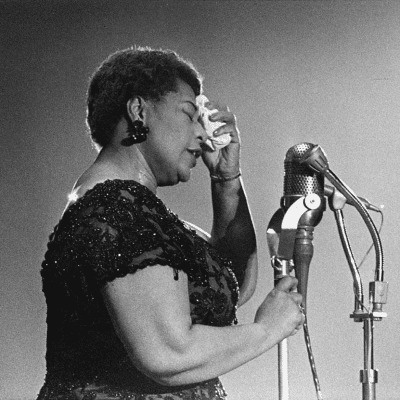
JJM He had a problem working with Ella Fitzgerald as well.
JC Yes, like Roy, Ella was a very sensitive person. She might have gotten a little uptight with Roy. They would both get a little anxious and fidgety before a concert, and this would often lead to an argument. Their apprehensive, nervous personalities did not result in a successful partnership — certainly not as successful as his with Anita OíDay. Ella and Roy had known each other for years and years — all the way back to the mid thirties — but frequently one would say something that the other misunderstood, and they would end up seething and sulking. They made a few recordings together, but they are not rated particularly high on either of their career achievements.
JJM Getting back to Roy and Dizzy Gillespie, the bassist Red Callendar felt that Roy was originally hostile to Dizzy Gillespie, and he said, “When Louis Armstrong first heard Dizzy, he put him down hard. Roy Eldridge resented Dizzy as well. They thought this guy is doing tricks. The respect came later.” Is it accurate to say that Eldridge was hostile toward Gillespie’s emergence?
JC Yes, at one point I believe he was. He was hostile until Dizzy acknowledged the debts he owed Roy Eldridge for his style of playing the trumpet. When Dizzy became eminent enough to do lots of interviews, he always pointed out that his original sound was based on Roy Eldridge. When he heard this sort of testimony, Roy was pretty pleased. They were both such competitors, and there was this constant back and forth among them, and at first, yes, it is safe to say that Roy resented Dizzy.
JJM When Metronome magazine asked Roy to choose his favorite records of 1949, among those on his list were recordings by Benny Carter and Chu Berry, but also those of David Rose and Mantovani. That begs me to ask the question of how Roy felt about modernists like Parker and Gillespie — and about bop in particular — given his own personal tastes?
JC It is interesting to witness the reaction when one revolutionary is overcome by another. Dizzy definitely took the place that Roy had occupied as the daring, bold trumpet player. Roy frequently reminded us that he would rarely knock bebop, but he always seemed to say it in a way that suggested he was protesting a bit too strenuously. He didn’t really like bop drummers mucking up the time, and instead preferred less adventurous drumming. Where he felt bebop got off on the wrong foot for him is when he would attend the jam sessions with the young bop players. Roy would sit in for hours just for the pure pleasure of playing, but many of the young players would play a number very fast, or they would play a number that changed key every few bars creating traps that would snare the older swing guys. While Roy was never really known as a swing guy, he nevertheless felt left out. He felt that these were tricks designed by the young players to principally get him to stumble and look bad.
JJM That must have been difficult for a man who once said, “I believe music must have something that fans can whistle to.”
JC That is right. Roy’s ambition during these sessions was to just go out and play, but he felt left out. And as I said, he was a very sensitive guy and that sort of turned him against bebop. When he got on the bandstand, he was going to work, and he was going to make people love him — not by any ridiculous gimmicks — but by worthy showmanship and marvelous instrumental prowess. It is important to remember that he was a big star, and he didn’t like being displaced. At the advent of bebop, he was yesterday’s news until people realized what he had done, and once people rediscovered his work — in large part due to his JATP appearances — his popularity picked back up again.
JJM I was quite struck by the experience he had with Count Basie — an experience he described as “worse than being in a white band.”
JC Yes, that was one thing I had some difficulty with. Roy and Basie had known one another since the late twenties, and he was still alive when Basie’s autobiography Good Morning Blues came out. I asked him about that, and told him that I didn’t realize he knew Basie very well early on, and Roy responded in a frustrated tone, saying that when he was young, Basie hired away two of his best sidemen. After all those years, he was still upset by it! Nonetheless, Basie wanted Roy in the band in the mid-sixties. But once Roy joined it was as though he was being paid back for something that happened in the distant past, because Basie hardly ever featured him. Roy was excited to play in a big band again, and even brought along arrangements that he featured in his own big band, but due to Basie’s complete lack of interest, he wound up playing quite a subsidiary role. Thus, while the announcement of Roy signing on to play with Basie was big news in the music business at the time, the relationship ultimately didn’t last three months, and Roy left, vowing to never work with Basie again. He did actually play with him again on a tour, but it was acrimonious, to put it mildly.
JJM You write, “Shorty Sherock was a great fan of Roy’s playing, and took his admiration to the point where he had his suits made in the same style as Roy, he ordered the same type of spectacles, and bought the same model of car that Roy drove.” How influential was Roy’s “style” and lifestyle choices on others?
JC I think Shorty Sherrock was a rather unusual devotee. People didn’t go quite as far as that, but there is a tradition in that. Rex Stewart, the great Duke Ellington cornetist, said that when he was young he tried to dress like Louis Armstrong, walk like him, talk like him, and even tried to get his throat to sound like Armstrong’s when he sang. It is really just another form of hero worship, but I would say Shorty took his interest in Roy to extremes.
JJM How did Roy spend the last years of his life?
JC During the seventies, he worked at a Dixieland jazz club in New York called Jimmy Ryan’s. While he played there for years, people couldn’t understand why, because Roy was one of the great jazz trumpet players, and here he was working at a Dixieland bar. Yes, it was quite an eminent, world famous place, but it was a Dixieland bar. For Roy, however, it was a place to work, and during this time, he didn’t have a lot of work. For one thing, Coleman Hawkins would hold out to play for a lot of money, which vexed Roy. While Hawkins made it clear he would play only if he made $1,000 a night, Roy would work for much less than that, simply because he always wanted to play. Hawkins didn’t care because he would take his sax out only from one weekend to the next, but Roy had to play every day of his life. Playing at Jimmy Ryanís several nights a week filled in a gap and allowed him to keep his chops up permanently. He would play his heart out, which was quite an inspiring sight to those watching him trying his best at all times, regardless of how many people were in the audience. He was determined to play up to his capabilities at all times. He never shirked his duties and set a wonderful example for other players.
But in 1980, during this long stay at Jimmy Ryan’s, he suffered a heart attack and never played the trumpet again. Many of us who knew him as a friend wondered what he would do because he had a trumpet in his hands from the time he was fourteen years old. He found a routine singing at some jazz clubs, and he played the piano around town. He could play pretty well on the piano — not enough to where you could really count on him — but he did pretty well. He sang, and he even devised a little act where he told stories while playing the piano. So he didn’t sit idle, but it is amazing that he didn’t play the trumpet again after his heart attack. He could play trumpet if he took it easy, but it was impossible to ask Roy Eldridge to take it easy while playing the trumpet. It was an impossible thing for Roy, because he had to play at his high level at all times, and since he knew he couldn’t do that anymore, he simply put the trumpet aside.
He was always a good companion, and even in those years, when he wasn’t playing, he never got down hard on himself, and he was never miserable. While he may have been sad at times, he was never full of self-pity or anything like that. At the end, he went almost nine years without ever again playing the trumpet.
JJM Toward the end of his life, in a pretty candid moment, Roy said if he could have learned to tongue the trumpet properly, he could have been a “top player.” Was he happy with the success he achieved in his career?
JC One of the biggest disappointments of his life is when he formed a big band and he just couldn’t get it to click. He spent a lot of money trying to establish it — getting the musical arrangements, buying the band stands and the uniforms, arranging the travel — and doing everything required of a big band leader, and that he couldn’t get it to click was a permanent disappointment for him. He spent a lot of his money on this, and while he was comfortable financially, he was not a rich man. But yes, I was astonished when he told me he could have been a “top player,” and he said something similar to the critic Dan Morgenstern — that he could have been a really wonderful trumpet player if only he had more legitimate training. But, it was truly remarkable for him to pick up a standard model trumpet, as he did, and get that wonderful sound out of it, so full of ideas, excitement and feeling. He needn’t worry about tonguing. Everything else he did was more than enough.
JJM I got the sense that the statement was made during one of those moments near the end of a life when a person looks back with some regret. Here is a man who helped revolutionize the instrument, yet during that moment it didn’t seem quite enough for him. Perhaps you can chalk that up to his competitive spirit?
JC Yes. I think that is it. As I said before, he wasn’t playing at all during the eighties, and to not play after having been such a presence on the bandstand for so long must have affected him. While he didn’t allow himself to be ill tempered about it or go away grumpy, there were moments when he reflected on certain aspects of his life — in particular about the big band — with some melancholy. And I believe that he often pondered his career path had the racial problems he encountered while playing with Shaw and Krupa not existed. Who knows what heights he might have reached?
_____________
“His music, more than most, seizes the moment, imbuing the air with a risk that marries passion, bravado, and disdain for easy answers to the problems of improvisation. In his hands, the trumpet was an exceedingly personal instrument, scarred with the same gravel that characterized his singing and driven by the same impetuousness and humor that leavened his conversation. His high notes — some of them plums; others, wild crested cries — are always recognizable, as are the low, rasping asides, the arching figures that paraphrase melody while turning the chords inside out, the straight-to-the-belly riffs, and the perfect time. Eldridge embodied jazz’s indulgence in the pleasure principle.”
– Gary Giddins, from Visions of Jazz: The First Century
_____
Roy Eldridge: Little Jazz Giant
by
John Chilton
*
About John Chilton
JJM Who was your childhood hero?
JC I had two gigantic musical heroes. One was Sidney Bechet, whose music was the first recorded jazz I ever heard on the radio. Very soon afterwards I heard Louis Armstrong, and never looked back. He remains my absolute all-time hero. It inspired me to start collecting his records when I was about twelve.
*
John Chilton divides his time between being a professional jazz trumpeter and writing books on jazz; in 2000 he won the British Jazz Award for “Writer of the Year.” His books include Ride, Red, Ride (the life of Henry ‘Red’ Allen), Billie’s Blues (on Billie Holiday), The Wizzard of Jazz (on Sidney Bechet), The Song of the Hawk (on Coleman Hawkins) and Let the Good Times Roll (on Louis Jordan). Both his Who’s Who of Jazz: Storyville to Swing Street and his Who’s Who of British Jazz have been hailed as the best reference books of their kind. The Jazz Rag recently described Chilton as “one of the world’s top jazz writers” and Down Beat magazine called him a “master of the craft of research.” For 27 years, his band The Feetwarmers has toured the world accompanying singer George Melly.*
_______________________________
Roy Eldridge products at Amazon.com
John Chilton products at Amazon.com
_______________________________
This interview took place on January 19, 2004
*
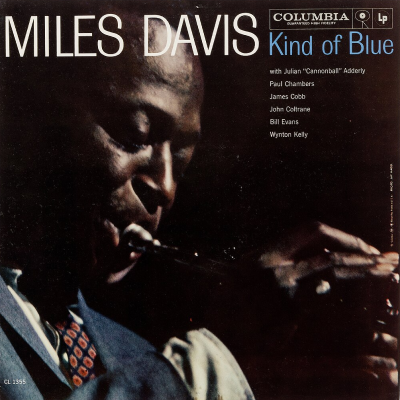
If you enjoyed this interview, you may want to read our interview with Miles Davis biographer John Szwed.
*
# Text from publisher.












Very informative piece from John Chilton the trumpeter, biographer and the compiler of
”Who’s who of Jazz” – (in his eighties, he is still around – bless him).
I used to listen to Eldridge in the seventies at Jimmy Ryan’s in NYC; he did not play much
trumpet then mainly entertaining with his singing and bawdy humor.
I thought the trumpet soloist on What a little moonlight can do was Charlie Shavers and
not Eldridge with lady day.
Jerrryjazz, keep them coming.
Cheers.
Girish