
“J.A. Rogers’ ‘Jazz at Home’: A Centennial Reflection on Jazz Representation Through the Lens of Stormy Weather and Everyday Life – an essay by Jasmine M. Taylor

July 2nd, 2025

.

.

1943 Stormy Weather lobby card

.


J.A. Rogers’ “Jazz at Home”: A Centennial Reflection on Jazz Representation Through the Lens of Stormy Weather and Everyday Life

By Jasmine M. Taylor

.

….

…..The first time I was exposed to ballet and tap, I was no more than six years old with ivory tights, a charcoal leotard, and a sturdy pair of tap shoes. Though my dance career was grotesquely short lived—deciding to trade in recital costumes and blush canvas soles for the balance beam, and eventually a pair of cheer poms—the technical form I developed during my early childhood never entirely left. More than two decades following my days of pliés, I still find myself conjuring up improvised solos in my living room.

…..My feet were lively and my soul fluttered listening to the tap-click-click-tap of my patent leather tap shoes. My single-digit years were overwhelmed with primped curls, structured poses, and sequined ensembles. I was even younger when the chaotic elegance of jazz tickled my ears. Before Bluetooth pairings and Spotify playlists, there were cassettes, CDs, and the radio—The Smooth Jazz Station, specifically. My age at the time is neither here nor there, but the image of sitting in the backseat of my mother’s mid-sized sedan and smooth jazz spilling from the speakers is vivid—it’s almost as if it occurred recently.

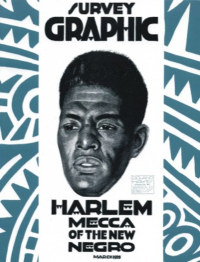
…..In the affluent words of Joel Augustus (J.A.) Rogers, “jazz is a marvel of paradox.” To acknowledge the centennial year of this published literature, jazz, in the year of 2025, is still a concoction of enigmatic soul music as much as it was when the words of Rogers were printed in the March issue of The New Negro in 1925. This piece of scholarship— suitably titled “Jazz at Home”—highlights the artistic freedom of jazz and its progressive evolution. Rogers professes his words with eloquence and vigor, paying homage to a genre of syncopated rhythms that transforms your physical body and internal being in tandem. Jazz has become a nationwide—global if we’re honest—sensation and beloved by broad audiences near and far. In recent decades, jazz has become a fundamental core in American culture and modern Americanism; not solely because of its artistic craftsmanship, but because of the spirit that jazz music embodies.

…..Humans are, undoubtedly, expressive creatures. We cry in the midst of sorrow, we grin during joyous occasions, and we tap our feet to a good beat. Emotions and outward expression are embedded into our souls, and similar that which is the “joyous revolt” of jazz, which Rogers beautifully depicts in the second paragraph. Emphasizing that jazz transcends being a mere form of music, Rogers further defines jazz as the rebellion of the emotions.

…..“’And that is why it has been such a safety valve for modern machine-ridden and convention-bound society,’ said Rogers. ‘It is the revolt of the emotions against repression.’”

…..One century later, Rogers’ words still hold massive weight in truth and accuracy. Our reaction to jazz, as a people, involves a combination of emotional sensations with a touch of inquisitiveness. It’s full of hypnotic earworms that is infectious to the ear and most importantly, to the soul. It’s one of those genres that is not only intergenerational, but it has always existed, in some form, through the foundational music of cultures across the globe. From the traditional dances of different Indigenous cultures, I am taken on a voyage with Rogers, who shares a glimpse of common traditional dances—the Spanish fandango, the Irish jig, and the hula hula of the South Seas to name a few—as prime examples of jazz music, in basic form, existing in other elements of music styles. It’s hard not to smile at the in-your-face reminder that music is the one universal language that exceeds linguistic and cultural barriers.

…..While reading Rogers’ article, one thing is starkly clear: the jazz of today still has the same enticing affect, I would say, as the big bands of yesteryear. This evidence is stunningly displayed in the 1943 musical Stormy Weather, directed by Andrew L. Stone and produced by William LeBaron. Though I was introduced to this film years ago, the words of Rogers evoked a new sense of pride and awakened emotions that were dormant until I viewed the film through fresh eyes and a different lens. All one hour and 18 minutes embodies Rogers’ words to a T: “’it is hilarity expressing itself through pandemonium; musical fireworks.’”

…..The film, for its time, was inclusively unique during its cinematic debut both in casting and its progressive strategy to appeal to a Black American audience. Without accentuating the film’s (borderline debatable) representation of the broad yet complex relationship between Black Americans and the performing arts, the multifaceted performer Bill Williamson, portrayed by Bill Robinson, is loosely inspired by Robinson’s life experiences. Known for his innovative dance style, Robinson is intentionally name-dropped by Rogers in “Jazz at Home” as a key contributor to lifting jazz far beyond mere playing technique and performance, and to a level of artistry that is not only inimitable but cannot be replicated. The fictional character Bill Williamson appears in the opening scene tap dancing on an open porch with the neighborhood children. Through Williamson’s buoyancy and animated storytelling, we recount his days after World War I and follow his journey to entertainment success.

…..I distinctly remember how I felt observing acclaimed acts such as Fats Waller, Lena Horne, Cab Calloway, and the Nicholas Brothers on my screen. After digesting the words of Rogers, the artistic expressiveness is not only striking in motion, but it tells a deeper story of radicalism and visual and aural storytelling through creative forms such as jazz, overlapping genres like blues and swing, ragtime (the ancestor of jazz music), and dance. The gift of having “educated feet,” a clever term a tap dancer uses to describe a performance by Bill Robinson’s character, is sprinkled throughout each scene from Robinson’s tap solo on the boat deck to the stunt-filled performance of Fayard and Harold Nicholas — professionally known as the Nicholas Brothers.

…..The film’s finale, boasting the glamour and craze of big bands and dance troupes, is the perfect atmosphere for a charismatic Calloway to direct one of his famous jazz and swing-infused compositions “Jumpin’ Jive.” It is during this scene that I am introduced to one of the greatest dance sequences of all time that still leaves me astonished. Graceful athleticism and creative genius of the Nicholas Brothers is on full display from the onset of their improvised sequence. The  tap-click-click-tap  of their shoes smoothly skate around the linen covered tabletops as guests gawk in wonder. The duo’s iconic number — unrehearsed and filmed in one take — is brilliantly flashy in the best way possible and concludes with a groundbreaking staircase scene, displaying the duo leaping over the other (descending to the next stair) into a split. As many times as I’ve marveled at this scene from the loveseat in my living room, I still cannot find the proper words to describe it, but perhaps Fred Astaire said it best. Highlighted by Turner Classic Movies (TCM), Astaire — a renowned multi-hyphenate in his own right — called the infamous scene of the Nicholas Brothers, “the greatest musical number he had ever seen.”

…..Music, specifically jazz, is the human soul in sonic form. It’s uncontrived and contradictory. It’s primitive and at times, far too abstract. It is emotional, it is spontaneous, and at its best, it demands authentic sincerity — everything that, I believe, the human soul needs to truly thrive in its intended purpose. While it’s fairly easy to grasp this concept through a surface level viewing of Stormy Weather,  Rogers’ “Jazz at Home” deepens my level of understanding and comprehension of the distinct correlation between jazz, unconventionality, and creative resilience.

…..“’Jazz comes from the soil,’ said Serge Koussevitzky, the ninth conductor of the Boston Symphony, ‘where all music has its beginning.’”

…..I’ve concluded that Rogers was, in many ways, remarkably ahead of his time. My personal claim of Rogers’ forward thinking surrounding the progressiveness of jazz music and its staying power is further supported in the final paragraph of his editorial.

…..“’Those who laugh and dance and sing are better off even in their vices than those who do not. . .At all events, jazz is rejuvenation, a recharging of the batteries of civilization with primitive new vigor. It has come to stay, and they are wise, who instead of protesting against it, try to lift and divert it into nobler channels.’”

…..At its root, jazz is a genre originally birthed from my ancestors, and my limbs flowing to its call always felt second nature. Moreover, jazz is joyful rebellion and blissful paradox. Let the music from your horns be brash. May your educated feet swing boldly and freely to each eccentric rhythm. The alluring depiction of jazz in Stormy Weather will inspire, but the words of Rogers will foster the gumption to do it. The spirit of jazz, at its core, is the essence of democracy. It is rejuvenating freedom. It is humanity. It is home.

.

.

___

.

.

Jasmine M. Taylor is a prose writer and playwright from Kansas City, Missouri. Earning her journalism degree in 2017, she puts her formal education to use through research endeavors. Her flash fiction story “Mind of the Healed” was published on the Johnnie Mae King blog in 2023 and her essay “A Revelation Birthed from African American Culture” was published in The Taborian in 2024. Taylor recently participated in the Kansas City Public Theatre’s Playwright’s Roundtable for their 2024-2025 season.

.

.

Watch the Nicholas Brothers dance sequence excerpted from the 1943 musical  Stormy Weather 

.

.

___

.

.

Click here to read a 2019 Jerry Jazz Musician interview with  Jeffrey Stewart, author of The New Negro: The Life of Alain Locke, for which Stewart received the 2019 Pulitzer Prize for Biography

Click here to read a 2011  Jerry Jazz Musician interview with Alyn Shipton, author of Hi-De-Ho: The Life of Cab Calloway

.

.

___

.

.

.

.

Click for:

Saharan Blues on the Seine,” Aishatu Ado’s winning story in the 68th Jerry Jazz Musician Short Fiction Contest

Information about how to submit your poetry or short fiction

Subscribe to the (free) Jerry Jazz Musician quarterly newsletter

Helping to support the ongoing publication of Jerry Jazz Musician, and to keep it commercial-free (thank you!)

.

___

.

.

Jerry Jazz Musician…human produced since 1999

.

.

.

 

Share this:

Comment on this article:

Your email address will not be published. Required fields are marked *
Site Archive

Your Support is Appreciated

Jerry Jazz Musician has been commercial-free since its inception in 1999. Your generous donation helps it remain that way. Thanks very much for your kind consideration.

Click here to read about plans for the future of Jerry Jazz Musician.

In this Issue

A collection of poetic responses to the events of 2025...Forty poets describe their experiences with the tumultuous events of 2025, resulting in a remarkable collection of work made up of writers who may differ on what inspired them to participate, but who universally share a desire for their voice to be heard amid a changing America.

The Sunday Poem

”Tuesday, June 24, 2025” by Russell Dupont

The Sunday Poem is published weekly, and strives to include the poet reading their work...

Russell Dupont reads his poem at its conclusion


Click here to read previous editions of The Sunday Poem

Interview

photo by Warren Fowler
Interview with John Gennari, author of The Jazz Barn: Music Inn, the Berkshires, and the Place of Jazz in American Life...The author discusses how in the 1950s the Berkshires – historic home to the likes of Hawthorne, Melville, Wharton, Rockwell, and Tanglewood – became a crucial space for the performance, study, and mainstreaming of jazz, and eventually an epicenter of the genre’s avant-garde.

Poetry

photo by William Gottlieb/Library of Congress
21 jazz poems on the 21st of January, 2026...An ongoing series designed to share the quality of jazz poetry continuously submitted to Jerry Jazz Musician. This edition features poets – several new to readers of this website – writing about their relationship with the music and its historic figures, including Chuck Mangione, John Coltrane, Barney Kessel, Count Basie, Bill Evans, Hubert Laws, and Steve Lacy.

Feature

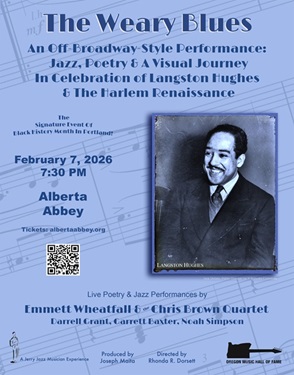
Press Release for “The Weary Blues: Celebrating The Harlem Renaissance and Langston Hughes...I recently wrote about a new endeavor of mine – producing a show in Portland celebrating the poetry of Langston Hughes and the Harlem Renaissance. What follows is the complete press release for the February 7 performance at the Alberta Abbey in Portland, Oregon.

Poetry

photo via Picryl
Three poems…written in the midst of our time...Poets within this community of writers are feeling this moment in time, and writing about it. Here are three examples.

Short Fiction

photo via Freerange/CCO
Short Fiction Contest-winning story #70 – “The Sound of Becoming,” by J.C. Michaels...The story explores the inner life of a young Southeast Asian man as he navigates the tension between Eastern tradition and Western modernity.

Feature

Linnaea Mallette/publicdomainpictures.net
A 2026 jazz poetry calendar...12 individual poets contribute a jazz-themed poem dedicated to a particular month, resulting in a 2026 calendar of jazz poetry that winds through the year with a variety of poetic styles and voices who share their journeys with the music, tying it into the month they were tasked to interpret. Along the way you will encounter the likes of Sonny Stitt, Charles Mingus, Jaco Pastorius, Wynton Kelly, John Coltrane, and Nina Simone.

Poetry

“To Renee Nicole Good, a poet” – a poem by Erren Geraud Kelly

Feature

Boris Yaro, CC BY 4.0, via Wikimedia Commons
“The Bowie Summer” – a personal memory, and how art can fundamentally reshape identity, by G.D. Newton-Wade

Poetry

photo via Shutterstock
“The Music of Lana’i Lookout” – a poem by Robert Alan Felt...The 17th anniversary of president-elect Barack Obama's scattering of his beloved grandmother's ashes is at the center of the poem, and serves as a reminder that moral personal character of leadership is what makes a country great.

Short Fiction

art by Alan Aine
“Skipping Up the Steps Since Six” – a free verse poem by Camille R.E....This narrative, free verse poem – a finalist in the recently concluded 70th Short Fiction Contest – is centered on the sense of isolation a daughter feels as she enters an unorthodox adolescence.

Poetry

Poems on Charlie “Bird” Parker (inspired by a painting by Al Summ) – an ekphrastic poetry collection...A collection of 25 poems inspired by the painting of Charlie Parker by the artist Al Summ.

Community

Letter from the Editor: “A Jerry Jazz Musician Experience”...Sharing a bit of what I’ve been up to of late, and make you aware of a new endeavor of mine…

Poetry

National Archives of Norway, CC BY 4.0 , via Wikimedia Commons
“Wonderful World” – a poem by Dan Thompson

A Letter from the Publisher

The gate at Buchenwald. Photo by Rhonda R Dorsett
War. Remembrance. Walls.
The High Price of Authoritarianism– by editor/publisher Joe Maita
...An essay inspired by my recent experiences witnessing the ceremonies commemorating the 80th anniversary of liberation of several World War II concentration camps in Germany.

Poetry

Wikimedia Commons
“Dorothy Parker, an Icon of the Jazz Age” – a poem by Jane McCarthy

Short Fiction

photo via publicdomainimages.net
“Welcome to America” – a short story by John Tures...The story – a short-listed entry in the recently concluded 70th Short Fiction Contest – is a combination of two true linked stories, both of which involved the same person. In one, he’s a witness to history. In the second, he’s an active participant in history, even becoming a hero. But one can’t understand the second until they know the first.

Feature

photo via Wikimedia Commons
Memorable Quotes – Lawrence Ferlinghetti, on a pitiable nation

Short Fiction

“Frusick: Making Sweeter Music” – a short story by J. W. Wood...In the 22nd century, a medical professional takes a bunch of kids to meet one of the last musicians left in England, and has an epiphany when he hears live music for the first time …

Community

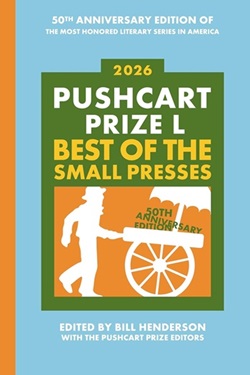
Nominations for the Pushcart Prize L (50)...Announcing the six writers nominated for the Pushcart Prize v. L (50), whose work appeared on the web pages of Jerry Jazz Musician or within print anthologies I edited during 2025.

Interview

Interview with Tad Richards, author of Listening to Prestige: Chronicling its Classic Jazz Recordings, 1949 – 1972...Richards discusses his book – a long overdue history of Prestige Records that draws readers into stories involving its visionary founder Bob Weinstock, the classic recording sessions he assembled, and the brilliant jazz musicians whose work on Prestige helped shape the direction of post-war music.

Playlist

“A Perfect 10” – a playlist of tentets by Bob Hecht...Bob adds another instrument to his progressive playlist feature, and shares what a variety of arrangers have been able to accomplish writing for a tentet.

Jazz History Quiz

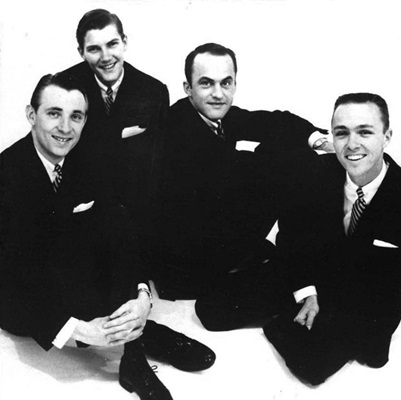
Jazz History Quiz #185...This posthumously-awarded Grammy winning musician/composer was the pianist and arranger for the vocal group The Hi-Lo’s (pictured) in the late 1950’s, and after working with Donald Byrd and Dizzy Gillespie became known for his Latin and bossa nova recordings in the 1960’s. He was also frequently cited by Herbie Hancock as a “major influence.” Who is he?

Poetry

photo via Wikimedia Commons
Jimi Hendrix - in four poems

Playlist

A sampling of jazz recordings by artists nominated for 2026 Grammy Awards – a playlist by Martin Mueller...A playlist of 14 songs by the likes of Samara Joy, Brad Mehldau, Dee Dee Bridgewater, Branford Marsalis, the Yellowjackets and other Grammy Award nominees, assembled by Martin Mueller, the former Dean of the New School of Jazz and Contemporary Music in New York.

Poetry

Ukberri.net/Uribe Kosta eta Erandioko agerkari digitala, CC BY 2.0, via Wikimedia Commons
In Memoriam: “Color Wheels” – a poem (for Jack DeJohnette) by Mary O’Melveny

Poetry

“Still Wild” – a collection of poems by Connie Johnson...Connie Johnson’s unique and warm vernacular is the framework in which she reminds readers of the foremost contributors of jazz music, while peeling back the layers on the lesser known and of those who find themselves engaged by it, and affected by it. I have proudly published Connie’s poems for over two years and felt the consistency and excellence of her work deserved this 15 poem showcase.

Feature

photo of Barry Harris by Mirko Caserta
“With Barry Harris at the 11th Street Bar” – a true jazz story by Henry Blanke...The writer - a lifelong admirer of the pianist Barry Harris - recalls a special experience he had with him in 2015

Interview

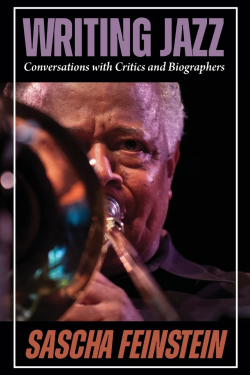
Interview with Sascha Feinstein, author of Writing Jazz: Conversations with Critics and Biographers...The collection of 14 interviews is an impressive and determined effort, one that contributes mightily to the deepening of our understanding for the music’s past impact, and fans optimism for more.

Feature

Trading Fours, with Douglas Cole, No. 27: “California Suite”...Trading Fours with Douglas Cole is an occasional series of the writer’s poetic interpretations of jazz recordings and film. This edition is dedicated to saxophone players and the mood scenes that instrument creates.

Community

photo of Dwike Mitchell/Willie Ruff via Bandcamp
“Tell a Story: Mitchell and Ruff’s Army Service” – an essay by Dale Davis....The author writes about how Dwike Mitchell and Willie Ruff’s U.S. Army service helped them learn to understand the fusion of different musical influences that tell the story of jazz.

Feature

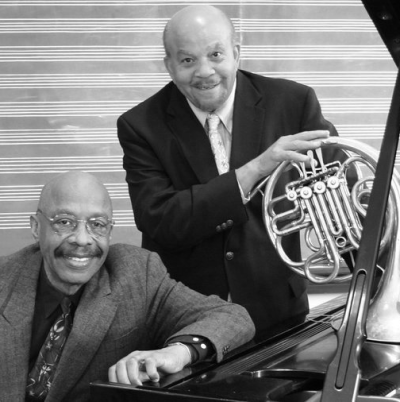
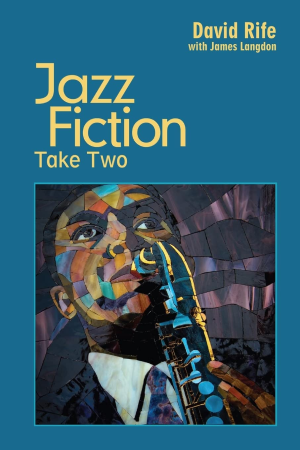
Excerpts from David Rife’s Jazz Fiction: Take Two– Vol. 16: Halloween on Mars? Or…speculative jazz fiction...A substantial number of novels and stories with jazz music as a component of the story have been published over the years, and the scholar David J. Rife has written short essay/reviews of them. In this 16th edition featuring excerpts from his outstanding literary resource, Rife writes about azz-inflected speculative fiction stories (sci-fi, fantasy and horror)

Art

photo by Giovanni Piesco
The Photographs of Giovanni Piesco: Art Farmer and Benny Golson...Beginning in 1990, the noted photographer Giovanni Piesco began taking backstage photographs of many of the great musicians who played in Amsterdam’s Bimhuis, that city’s main jazz venue which is considered one of the finest in the world. Jerry Jazz Musician will occasionally publish portraits of jazz musicians that Giovanni has taken over the years. This edition features the May 10, 1996 photos of the tenor saxophonist, composer and arranger Benny Golson, and the February 13, 1997 photos of trumpet and flugelhorn player Art Farmer.

Community

Community Bookshelf #5...“Community Bookshelf” is a twice-yearly space where writers who have been published on Jerry Jazz Musician can share news about their recently authored books and/or recordings. This edition includes information about books published within the last six months or so (March, 2025 – September, 2025)

Contributing Writers

Click the image to view the writers, poets and artists whose work has been published on Jerry Jazz Musician, and find links to their work

Coming Soon

New poetry collections, Jazz History Quiz, and lots of short fiction; poetry; photography; interviews; playlists; and much more in the works...

Interview Archive

Ella Fitzgerald/IISG, CC BY-SA 2.0 , via Wikimedia Commons
Click to view the complete 25-year archive of Jerry Jazz Musician interviews, including those recently published with Judith Tick on Ella Fitzgerald (pictured),; Laura Flam and Emily Sieu Liebowitz on the Girl Groups of the 60's; Tad Richards on Small Group Swing; Stephanie Stein Crease on Chick Webb; Brent Hayes Edwards on Henry Threadgill; Richard Koloda on Albert Ayler; Glenn Mott on Stanley Crouch; Richard Carlin and Ken Bloom on Eubie Blake; Richard Brent Turner on jazz and Islam; Alyn Shipton on the art of jazz; Shawn Levy on the original queens of standup comedy; Travis Atria on the expatriate trumpeter Arthur Briggs; Kitt Shapiro on her life with her mother, Eartha Kitt; Will Friedwald on Nat King Cole; Wayne Enstice on the drummer Dottie Dodgion; the drummer Joe La Barbera on Bill Evans; Philip Clark on Dave Brubeck; Nicholas Buccola on James Baldwin and William F. Buckley; Ricky Riccardi on Louis Armstrong; Dan Morgenstern and Christian Sands on Erroll Garner; Maria Golia on Ornette Coleman.