
“At Del Rey Rooms” — a short story by Tim J. Myers

March 11th, 2017

“At Del Rey Rooms,” a story by Tim J. Myers, was a finalist in our recently concluded 44th Short Fiction Contest.  It is published with the permission of the author.


At Del Rey Beach

by Tim J. Myers

_____


Years later he became a professor, a scholar—wrote a well-received book on epistemology.  But back then he was just a guy in love.

They’d taken a cheap room in Venice for the summer, a run-down place a couple of blocks from Dockweiler Beach.  You could always smell the sea, its powerful mix of salt freshness and rot.  He’d never lived with a woman before; she’d had other boyfriends.  She was from back-county San Diego, told him she’d come to L.A. looking for a real life.  He’d just graduated from Pepperdine, history major, minor in logic.  They each had crappy jobs, enough to pay the bills but not much more.

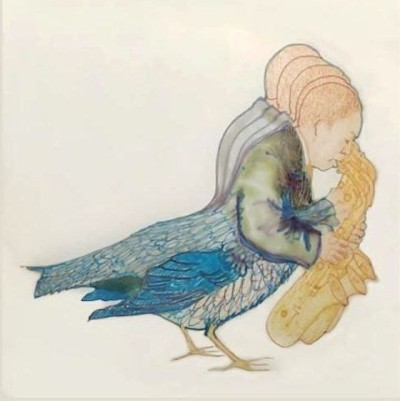
Their room was on the second floor, its big windows opening onto a narrow street of the seaside city, a place half vacation-spot, half party-district.  Across the street, in the direction of the Pacific, stood a dreary-looking laundromat and a small grocery store with kids’ water toys hanging from the awning and boogie boards stacked against the wall to rent.  That morning some black guy was playing sax in front of the laundromat, his beat-up case open for contributions on the sidewalk in front of him.  The air smelled of pancakes and frying bacon.  It was Sunday; most of the tourists were still asleep, or crowded into the cheap breakfast places back on the boulevard.

He woke feeling groggy, saw her standing at the window.  It had been a strange night.  They’d gone to Stevie’s, drunk too much rum, danced to loud hip-hop and ska around the apartment pool, then staggered back home.  She’d worn that short black cocktail dress she looked so good in, with the single strand of pearls her mother had given her, and black pantyhose–and, he realized, once he’d shut the door behind them and gone for her, those black lace panties that always drove him crazy.

But he hadn’t been able to come.  They struggled for a while and he felt himself getting overheated, worried she’d be put off by the sweat that had begun dripping from his forehead and shoulders.  So he stopped, murmured something, and they fell apart, and sleep took them as a midnight breeze off the sea began to stir through the worn little room.

It wasn’t the first time, and it wasn’t the booze; he knew it and she knew it.  So that morning, with sunlight streaming in and the sax player revving up his horn in long ascending glides, he told himself, Right now.  Right now!  There’s gotta be a reckoning.

Standing at the window, wearing nothing but an oversized t-shirt, she had that vacant look, watching the world but not really seeing it, looking down at the street, following things with her eyes:  dog slipping into an alley, gull pecking at fast-food wrappers on the sidewalk, smiling heavy-set man and his little boy gleefully paying for a boogie board.

“Val,” he said softly, “we have to talk.”

She didn’t answer, but that didn’t surprise him.  The sax moaned low.

“You know something’s wrong.  I know you do,” he said, level and calm, the voice he used in classes at college.  He was building an argument, trying to keep it clear, to be honest and persuasive.  He knew it had to be done just right.

“So I have to say some things,” he continued, sitting up in bed with the sheet still over his legs.  Down in the street the sax player began barking out a shuffle beat, holding it with staccato notes and sudden slides.  “Because I’m in love with you–you know that.  And we can make this work.”   She still didn’t answer, stayed at the window with her back to him, a breeze momentarily lifting her hair.  But he saw her look slightly down and back, so he knew she was listening.

“I’m not perfect, Val–I know that.  And I’m ready to work at this.  I really am.  But there’s something in you that’s…that’s not…not exactly here with me.  You see what I’m saying?

“You keep pulling back.  You’ve got a hundred ways to do it.  We start getting close, we have a great day, or we make love and it’s just perfect–but in a day or two you’re suddenly all pissed off about something.  Or you tell me this isn’t the life for you–like I’m part of it, and you can just chuck it away.  Or you won’t let me touch you, like all I want is sex.”  He paused, listening idly as the sax went smoothing into minor notes.

“Or you do what you’re doing right now.  You go silent on me.  You get that empty look, and nothing I say or do makes any difference.”

She spoke without looking at him.  “What do you want me to say, Ronnie?  What am I supposed to say?”

Goddamnit! he screamed to himself, You could say, Ronnie, I don’t like the way you…  Or, Ronnie, you have to understand…  Or Ronnie, I don’t mean to…  Anything!  At least it would be a beginning…!–hearing in his own head, even as he said the word, its counter-word, its shadow:  Ending.

“I can’t tell you what to say, Val.  It has to come from you,” he said quietly, still looking at the back of her head, noticing with desperate fear how beautiful her hair was, how the gold-blonde strands fell with such grace onto her shoulders and upper back.  With an effort he cleared his mind.  “But I know one thing.”

He stopped for a moment, waiting.  She didn’t speak.

“Okay, Val,” he said grimly.  “Here’s the thing.  You’ve got some dark shit going on in you.  I don’t know what all of it is–though I have my suspicions.  Maybe your folks, how things were in your family.  And maybe the way guys treated you, or whatever.  But I can see all this stuff in you.  And it scares me, Val.  Because it keeps making you pull away, or suddenly treat me like shit for no reason.

“I don’t want to say this stuff.  But I have to.  Because I’m in love with you.  That’s the way it happens; when two people are in love, they just start kind of…I don’t know…traveling into each other.  And my eyes are open, so I see this stuff.  I know you don’t want to talk about it.  I know how much it hurts you.”

The sax was purring now, in sweet lyric lines, a love song.  He went on doggedly.

“I know how hard it is to look at all that stuff; I’ve seen what it does to you.  I saw it that weekend at your folks’.  It’s like you blame yourself.  I’m sorry, Val.  But I’m in love with you.  I need certain stuff from you.  I don’t mean to rub your nose in this, but…we’ve got to talk about it.  Or something.  You’ve got to face these demons and deal with them, or we won’t be able to…to build anything together.”

The sax was soaring in high blue notes, pure and sustained.  Then it dropped to a jerking flow of short runs with flatted fifths, each slower than the one before.

“Okay, Ronnie,” she said, turning toward him.  “Okay.  Sure.  We’ll talk.  But I’ve gotta get some groceries,” and she crossed to her suitcase and began getting dressed, pulling her jeans on under her t-shirt and turning away when she took it off so he couldn’t see her breasts.

That’s when it hit him.  In that instant he knew–Sunday morning sea-breeze riffling the curtains, sax notes seeming to move with the twisting of his heart–that she’d leave him.  And he realized, all at once, the mistake he’d made–that all he could ever be to her now was a mirror.  And she’d just turn away.  Maybe she couldn’t help it.

That sax guy, he thought vacantly. Why does he keep playing the same line?  I guess he’s practicing.

Guess we’re all just practicing.

But that was wry, that was staged, an ironic remark–a way of pretending he could somehow keep his cool.  He recognized the subterfuge.  But there was no fooling himself; he knew how bad it was going to be, the pain that was coming.

We might have had a chance before, he told himself, still sitting in bed as she went out the door.

The sax stopped playing.

            History, he said to himself


__________

Tim J. Myers is a writer, storyteller, songwriter, and senior lecturer at Santa Clara University.   His work has made the New York Times bestseller list for children’s books, been reviewed in the Times, and been read aloud on NPR.  Find him at www.TimMyersStorySong.com or on Facebook at https://www.facebook.com/TimJMyers1.
Share this:

One comments on ““At Del Rey Rooms” — a short story by Tim J. Myers”
Comment on this article:

Your email address will not be published. Required fields are marked *

Site Archive

Your Support is Appreciated

Jerry Jazz Musician has been commercial-free since its inception in 1999. Your generous donation helps it remain that way. Thanks very much for your kind consideration.

Click here to read about plans for the future of Jerry Jazz Musician.

In this Issue

A collection of poetic responses to the events of 2025...Forty poets describe their experiences with the tumultuous events of 2025, resulting in a remarkable collection of work made up of writers who may differ on what inspired them to participate, but who universally share a desire for their voice to be heard amid a changing America.

The Sunday Poem

”Tuesday, June 24, 2025” by Russell Dupont

The Sunday Poem is published weekly, and strives to include the poet reading their work...

Russell Dupont reads his poem at its conclusion


Click here to read previous editions of The Sunday Poem

Interview

photo by Warren Fowler
Interview with John Gennari, author of The Jazz Barn: Music Inn, the Berkshires, and the Place of Jazz in American Life...The author discusses how in the 1950s the Berkshires – historic home to the likes of Hawthorne, Melville, Wharton, Rockwell, and Tanglewood – became a crucial space for the performance, study, and mainstreaming of jazz, and eventually an epicenter of the genre’s avant-garde.

Poetry

photo by William Gottlieb/Library of Congress
21 jazz poems on the 21st of January, 2026...An ongoing series designed to share the quality of jazz poetry continuously submitted to Jerry Jazz Musician. This edition features poets – several new to readers of this website – writing about their relationship with the music and its historic figures, including Chuck Mangione, John Coltrane, Barney Kessel, Count Basie, Bill Evans, Hubert Laws, and Steve Lacy.

Feature

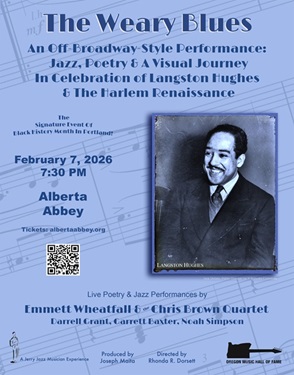
Press Release for “The Weary Blues: Celebrating The Harlem Renaissance and Langston Hughes...I recently wrote about a new endeavor of mine – producing a show in Portland celebrating the poetry of Langston Hughes and the Harlem Renaissance. What follows is the complete press release for the February 7 performance at the Alberta Abbey in Portland, Oregon.

Poetry

photo via Picryl
Three poems…written in the midst of our time...Poets within this community of writers are feeling this moment in time, and writing about it. Here are three examples.

Short Fiction

photo via Freerange/CCO
Short Fiction Contest-winning story #70 – “The Sound of Becoming,” by J.C. Michaels...The story explores the inner life of a young Southeast Asian man as he navigates the tension between Eastern tradition and Western modernity.

Feature

Linnaea Mallette/publicdomainpictures.net
A 2026 jazz poetry calendar...12 individual poets contribute a jazz-themed poem dedicated to a particular month, resulting in a 2026 calendar of jazz poetry that winds through the year with a variety of poetic styles and voices who share their journeys with the music, tying it into the month they were tasked to interpret. Along the way you will encounter the likes of Sonny Stitt, Charles Mingus, Jaco Pastorius, Wynton Kelly, John Coltrane, and Nina Simone.

Poetry

“To Renee Nicole Good, a poet” – a poem by Erren Geraud Kelly

Feature

Boris Yaro, CC BY 4.0, via Wikimedia Commons
“The Bowie Summer” – a personal memory, and how art can fundamentally reshape identity, by G.D. Newton-Wade

Poetry

photo via Shutterstock
“The Music of Lana’i Lookout” – a poem by Robert Alan Felt...The 17th anniversary of president-elect Barack Obama's scattering of his beloved grandmother's ashes is at the center of the poem, and serves as a reminder that moral personal character of leadership is what makes a country great.

Short Fiction

art by Alan Aine
“Skipping Up the Steps Since Six” – a free verse poem by Camille R.E....This narrative, free verse poem – a finalist in the recently concluded 70th Short Fiction Contest – is centered on the sense of isolation a daughter feels as she enters an unorthodox adolescence.

Poetry

Poems on Charlie “Bird” Parker (inspired by a painting by Al Summ) – an ekphrastic poetry collection...A collection of 25 poems inspired by the painting of Charlie Parker by the artist Al Summ.

Community

Letter from the Editor: “A Jerry Jazz Musician Experience”...Sharing a bit of what I’ve been up to of late, and make you aware of a new endeavor of mine…

Poetry

National Archives of Norway, CC BY 4.0 , via Wikimedia Commons
“Wonderful World” – a poem by Dan Thompson

A Letter from the Publisher

The gate at Buchenwald. Photo by Rhonda R Dorsett
War. Remembrance. Walls.
The High Price of Authoritarianism– by editor/publisher Joe Maita
...An essay inspired by my recent experiences witnessing the ceremonies commemorating the 80th anniversary of liberation of several World War II concentration camps in Germany.

Playlist

“Darn! All These Dreams!” – a playlist by Bob Hecht...In this edition, the jazz aficionado Bob Hecht’s 13-song playlist centers on one tune, the great Jimmy Van Heusen/Eddie DeLange standard, “Darn That Dream,” with the first song being a solo musician recording and each successive version adding an instrument.

Poetry

Wikimedia Commons
“Dorothy Parker, an Icon of the Jazz Age” – a poem by Jane McCarthy

Short Fiction

photo via publicdomainimages.net
“Welcome to America” – a short story by John Tures...The story – a short-listed entry in the recently concluded 70th Short Fiction Contest – is a combination of two true linked stories, both of which involved the same person. In one, he’s a witness to history. In the second, he’s an active participant in history, even becoming a hero. But one can’t understand the second until they know the first.

Feature

photo via Wikimedia Commons
Memorable Quotes – Lawrence Ferlinghetti, on a pitiable nation

Short Fiction

“Frusick: Making Sweeter Music” – a short story by J. W. Wood...In the 22nd century, a medical professional takes a bunch of kids to meet one of the last musicians left in England, and has an epiphany when he hears live music for the first time …

Community

Nominations for the Pushcart Prize L (50)...Announcing the six writers nominated for the Pushcart Prize v. L (50), whose work appeared on the web pages of Jerry Jazz Musician or within print anthologies I edited during 2025.

Interview

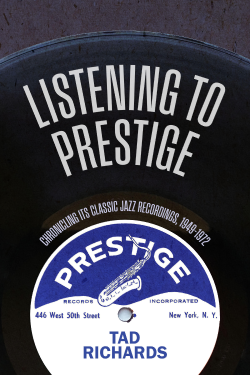
Interview with Tad Richards, author of Listening to Prestige: Chronicling its Classic Jazz Recordings, 1949 – 1972...Richards discusses his book – a long overdue history of Prestige Records that draws readers into stories involving its visionary founder Bob Weinstock, the classic recording sessions he assembled, and the brilliant jazz musicians whose work on Prestige helped shape the direction of post-war music.

Jazz History Quiz

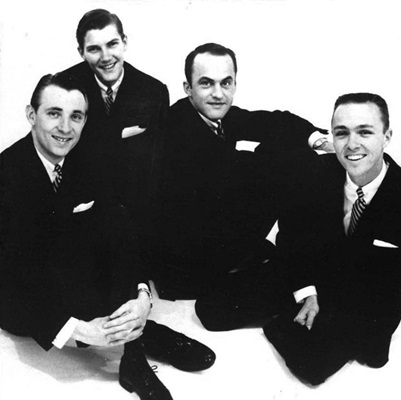
Jazz History Quiz #185...This posthumously-awarded Grammy winning musician/composer was the pianist and arranger for the vocal group The Hi-Lo’s (pictured) in the late 1950’s, and after working with Donald Byrd and Dizzy Gillespie became known for his Latin and bossa nova recordings in the 1960’s. He was also frequently cited by Herbie Hancock as a “major influence.” Who is he?

Poetry

photo via Wikimedia Commons
Jimi Hendrix - in four poems

Playlist

A sampling of jazz recordings by artists nominated for 2026 Grammy Awards – a playlist by Martin Mueller...A playlist of 14 songs by the likes of Samara Joy, Brad Mehldau, Dee Dee Bridgewater, Branford Marsalis, the Yellowjackets and other Grammy Award nominees, assembled by Martin Mueller, the former Dean of the New School of Jazz and Contemporary Music in New York.

Poetry

Ukberri.net/Uribe Kosta eta Erandioko agerkari digitala, CC BY 2.0, via Wikimedia Commons
In Memoriam: “Color Wheels” – a poem (for Jack DeJohnette) by Mary O’Melveny

Poetry

“Still Wild” – a collection of poems by Connie Johnson...Connie Johnson’s unique and warm vernacular is the framework in which she reminds readers of the foremost contributors of jazz music, while peeling back the layers on the lesser known and of those who find themselves engaged by it, and affected by it. I have proudly published Connie’s poems for over two years and felt the consistency and excellence of her work deserved this 15 poem showcase.

Feature

photo of Barry Harris by Mirko Caserta
“With Barry Harris at the 11th Street Bar” – a true jazz story by Henry Blanke...The writer - a lifelong admirer of the pianist Barry Harris - recalls a special experience he had with him in 2015

Interview

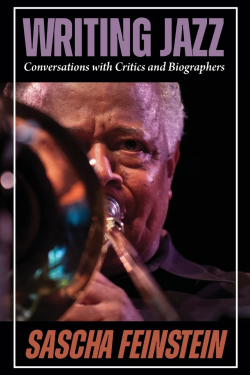
Interview with Sascha Feinstein, author of Writing Jazz: Conversations with Critics and Biographers...The collection of 14 interviews is an impressive and determined effort, one that contributes mightily to the deepening of our understanding for the music’s past impact, and fans optimism for more.

Feature

Trading Fours, with Douglas Cole, No. 27: “California Suite”...Trading Fours with Douglas Cole is an occasional series of the writer’s poetic interpretations of jazz recordings and film. This edition is dedicated to saxophone players and the mood scenes that instrument creates.

Community

photo of Dwike Mitchell/Willie Ruff via Bandcamp
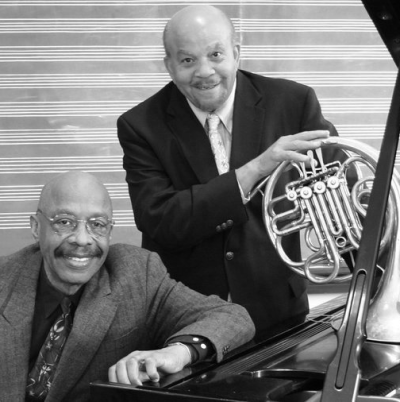
“Tell a Story: Mitchell and Ruff’s Army Service” – an essay by Dale Davis....The author writes about how Dwike Mitchell and Willie Ruff’s U.S. Army service helped them learn to understand the fusion of different musical influences that tell the story of jazz.

Feature

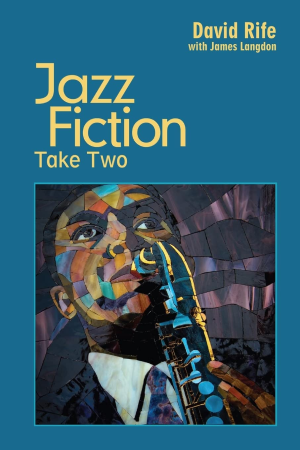
Excerpts from David Rife’s Jazz Fiction: Take Two– Vol. 16: Halloween on Mars? Or…speculative jazz fiction...A substantial number of novels and stories with jazz music as a component of the story have been published over the years, and the scholar David J. Rife has written short essay/reviews of them. In this 16th edition featuring excerpts from his outstanding literary resource, Rife writes about azz-inflected speculative fiction stories (sci-fi, fantasy and horror)

Art

photo by Giovanni Piesco
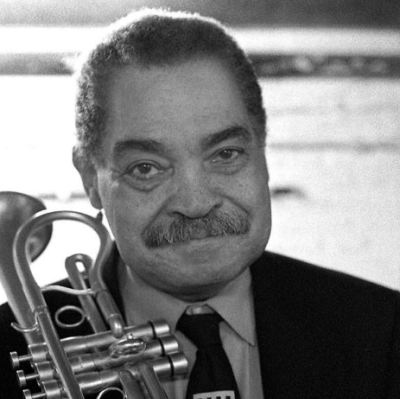
The Photographs of Giovanni Piesco: Art Farmer and Benny Golson...Beginning in 1990, the noted photographer Giovanni Piesco began taking backstage photographs of many of the great musicians who played in Amsterdam’s Bimhuis, that city’s main jazz venue which is considered one of the finest in the world. Jerry Jazz Musician will occasionally publish portraits of jazz musicians that Giovanni has taken over the years. This edition features the May 10, 1996 photos of the tenor saxophonist, composer and arranger Benny Golson, and the February 13, 1997 photos of trumpet and flugelhorn player Art Farmer.

Community

Community Bookshelf #5...“Community Bookshelf” is a twice-yearly space where writers who have been published on Jerry Jazz Musician can share news about their recently authored books and/or recordings. This edition includes information about books published within the last six months or so (March, 2025 – September, 2025)

Contributing Writers

Click the image to view the writers, poets and artists whose work has been published on Jerry Jazz Musician, and find links to their work

Coming Soon

New poetry collections, Jazz History Quiz, and lots of short fiction; poetry; photography; interviews; playlists; and much more in the works...

Interview Archive

Ella Fitzgerald/IISG, CC BY-SA 2.0 , via Wikimedia Commons
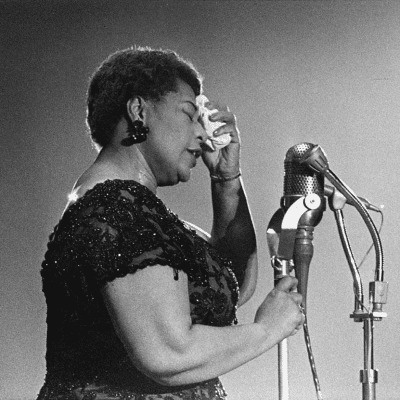
Click to view the complete 25-year archive of Jerry Jazz Musician interviews, including those recently published with Judith Tick on Ella Fitzgerald (pictured),; Laura Flam and Emily Sieu Liebowitz on the Girl Groups of the 60's; Tad Richards on Small Group Swing; Stephanie Stein Crease on Chick Webb; Brent Hayes Edwards on Henry Threadgill; Richard Koloda on Albert Ayler; Glenn Mott on Stanley Crouch; Richard Carlin and Ken Bloom on Eubie Blake; Richard Brent Turner on jazz and Islam; Alyn Shipton on the art of jazz; Shawn Levy on the original queens of standup comedy; Travis Atria on the expatriate trumpeter Arthur Briggs; Kitt Shapiro on her life with her mother, Eartha Kitt; Will Friedwald on Nat King Cole; Wayne Enstice on the drummer Dottie Dodgion; the drummer Joe La Barbera on Bill Evans; Philip Clark on Dave Brubeck; Nicholas Buccola on James Baldwin and William F. Buckley; Ricky Riccardi on Louis Armstrong; Dan Morgenstern and Christian Sands on Erroll Garner; Maria Golia on Ornette Coleman.