
“A Love Supreme (On John Coltrane)” — an essay by Carlo Rey Lacsamana

January 6th, 2023

.

.

photo by Jjb91, CC BY-SA 3.0/via Wikimedia Commons
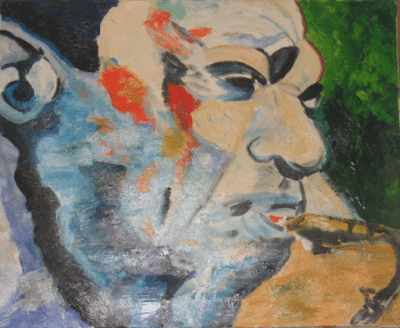
photo by Jjb91, CC BY-SA 3.0/via Wikimedia Commons

John Coltrane

.

.

___

.

.

            A Love Supreme (On John Coltrane)

by

Carlo Rey Lacsamana

.

…..Listen to Coltrane. His music is always destined to reach human intensity and tenderness. (I think of the albums My Favorite Things, Giant Steps, and A Love Supreme). Intensity and tenderness are, for him, interchangeable. Most of the time these two qualities intertwine in his improvisations. The quantity and quality of notes, the rhythmic variations, the dissonance and harmony that merge into a singular personality. This tells of the air that he blows through the instrument doesn’t simply come from his chest or belly. The source is much deeper. But less mysterious. This singular element lacking in most musicians today: the love of finding, of searching, of exploring the other music outside the known and accepted music is the music which ultimately must be heard, must be communicated. “Finding is the first Act,” wrote Emily Dickinson. For such a project it was necessary to pay attention to musical traditions of other cultures, to different points of views. He was a great listener as much as he was a great player. Perhaps the greatness of a musician lies not in originality (whose definition is too vague and arbitrary) but in his capacity for listening. I believe that’s what great musicians ultimately teach us: a wholehearted attitude towards listening. It takes love to really listen.

…..Sheets of sound. The plethora of notes that Coltrane blows is not to be mistaken as a kind of loquacity but rather an inherent need to speak. To say that which has been silenced by norms, laws, oppression, History. To speak the unspeakable. The Afro-American writer and Civil Rights activist, James Baldwin writes:

“In order to deal with the untapped and dormant force of the previously subjugated, in order to survive as a human, moving, moral weight in the world, America and all Western nations will be forced to reexamine themselves and release themselves from many things that are now taken to be sacred, and to discard nearly all the assumptions that have been used to justify their lives and their anguish and their crimes so long.”

…..The subversive quality of (his) music is its power to unveil the invisibility of emotions and ideas: in this case the black creative resources and resistance. Coltrane’s openness and playfulness, his generosity to let new ideas flow through him and manifest in his music is in itself an act of artistic civil disobedience: defying the thread of lethargy and conformism in the general cultural situation. His persistence to expand the framework of jazz through his compositions and improvisations demonstrates his quarrel with the status quo. The phrases of his solos–the way the notes are linked together and deviate from basic harmony–pose a challenge to the “protective sentimentality” of the listeners. His inventiveness cuts across dogmatic spaces and conventional beliefs. Improvisation was a way of breaking through cynicism and apathy.

…..Miles Davis was not being too generous when he would turn the spotlight to John’s interminable solos. Miles knew that John had something to say. And the latter tried to speak through several albums, and still speaking today through countless musicians influenced by him.

…..His music has the solemnity of a church sermon which echoes the rich spiritual tradition of black churches in America. Like his preacher father John Coltrane is a preacher with the saxophone. His playing and intonation resemble the energy and pitch of a preacher preaching to the community. His restless experimentation is tantamount to the endless search for truth, for answers to the social and psychological problems of a society built on ignorance and belligerence. He believed in the sanctity of the Sound as much as he believed in the sacredness of the Word.

…..Blues and jazz are music which emerged out of social indifference and inertia. They are confessional portraits of a people that fought for and believed in their own human worth. They are about creativity and love under the toughest and perilous conditions. The brilliant theologian, James Cone argues:

“the origin and definition of the blues cannot be understood independent of the suffering that black people endured in the context of white racism and hate… suffering and its relation to blackness is inseparable from the meaning of the blues.”

…..The link between Coltrane’s indefatigable search for new ways of improvising and the colossal struggle of Afro-American communities against white supremacy is telling. The deeper spirituality Coltrane pursued in music resonated with the social aspiration and hopes of his neglected community. The blues, as well as jazz, says the Afro-American intellectual, Cornel West, “professes to the deep psychic and material pains inflicted on black people within the sphere of a mythological land of opportunity.” Coltrane’s music can be heard (thought) of as expressive of the “commitment to the value of the individual and of speaking up about ugly truths; it asserts the necessity of robust dialogue.” Like the early blues musicians before him Coltrane struggled, in the face of society’s racial biases, to liberate and communicate the creative and spiritual resources inherent in black tradition to the wider community.

…..The artist’s creative force is perilous to state power. The danger of evoking new modes of feeling; of imagining; of being; of loving. Art can appease, but it can also disturb the status-quo of the mind. No wonder Plato was wary of admitting musicians to his ideal Republic. Coltrane’s music has all the stubborn qualities of subversiveness.

…..The experimental form he embraced in his later years was highly criticized, mocked as obscure, alienated many of his listeners and fellow musicians. Perhaps it was the logical conclusion of his successive acts of soul searching. That there is something more to be heard. Coltrane’s artistry is comparable to that of a master craftsman weaving an enormous basket which can hold an infinite variety of objects, emotions, ideas, circumstances, experiences, and what emerges from it is a kind of genuineness: a music that embraces all, as if “all made from one – all made in one”: the accompanying text to the fourth movement of A Love Supreme. His creative imaginative vigor broke through any dogmatic approach to music. He was cautious of fixation of ideas. He was always attempting to search for new sounds and their corresponding emotional meanings. He once said in an interview: “I would like to bring to people something like happiness.” Why happiness? There is something painfully sad to have lived in an environment where a certain group or community is systematically marginalized and oppressed by, in the words of Edward Said, “the imperialist power that would otherwise compel you to disappear or to accept a miniature version of yourself.” The overlap of Afro-American struggle and musical experience is the source of cultural identity for Coltrane. Through music he recovered a people’s sense of pride in one’s heritage; their presence that History has no power to make disappear.


.

.

___

.

.

Carlo Rey Lacsamana

Carlo Rey Lacsamana is a Filipino writer, poet, and artist born and raised in Manila, Philippines. Since 2005, he has been living and working in the Tuscan town of Lucca, Italy. He regularly contributes to journals in the Philippines, writing politics, culture, and art. His works have appeared inEsquire Magazine, Colossus Magazine, Drunkmonkeysweb, Amsterdam Quarterly, Lumpen Journal (London), The Wild World(Berlin),Literary Shanghai and in other numerous magazines. One of his stories has been recorded as a podcast story in the narrative podcast Pillow Talking (Australia).

Follow him on Instagram @carlo_rey_lacsamana

.

.

Listen to the 1964 recording of John Coltrane playing “Psalm,” from A Love Supreme; with McCoy Tyner (piano); Jimmy Garrison (bass); and Elvin Jones (drums). [Universal Music Group]

.

.

___

.

.

Click here for information on how to submit your work

Click here to subscribe to the Jerry Jazz Musician quarterly newsletter

Click here to help support the continuing publication of Jerry Jazz Musician

.

.

.



Share this:

One comments on ““A Love Supreme (On John Coltrane)” — an essay by Carlo Rey Lacsamana”

  1. Thank you for sharing with us the brilliance of a great man whose music superceded conventional jazz. John Coltrain explored the heavens for a sound beyond the spheres of social norms and boundaries. He communicated vision in making Giant Steps towards inclusion and harmony toward connecting man to God through a Love Supreme for the betterment human relationships.
Comment on this article:

Your email address will not be published. Required fields are marked *

Site Archive

Your Support is Appreciated

Jerry Jazz Musician has been commercial-free since its inception in 1999. Your generous donation helps it remain that way. Thanks very much for your kind consideration.

Click here to read about plans for the future of Jerry Jazz Musician.

In This Issue

photo by William Gottlieb/design by Rhonda R. Dorsett
21 jazz poems on the 21st of November, 2025...An ongoing series designed to share the quality of jazz poetry continuously submitted to Jerry Jazz Musician. This edition features poems communicating the emotional appeal of jazz music, as well as nods to the likes of Miles Davis, Regina Carter, Maynard Ferguson, Ornette Coleman, and Max Roach.

The Sunday Poem

photo via PickPik

”Caught in a Storm” by Michael L. Newell

The Sunday Poem is published weekly, and strives to include the poet reading their work.... Joe Maita reads Michael L. Newell’s poem at its conclusion


Click here to read previous editions of The Sunday Poem

Short Fiction

photo via Freerange/CCO
Short Fiction Contest-winning story #70 – “The Sound of Becoming,” by J.C. Michaels...The story explores the inner life of a young Southeast Asian man as he navigates the tension between Eastern tradition and Western modernity.

Community

Calling All Poets…Submissions guidelines for the anthology “Black History in Poetry”...We are currently seeking poetry from writers of all backgrounds for Black History in Poetry, an anthology scheduled for publication in the Summer of 2026. The anthology will be a means of celebrating and honoring notable Black Americans by offering poetry that teems with imagery, observation, emotion, memory, testimony, insight, impact, and humanity. Our aim is to give readers a way to visualize Black history from a fresh perspective.

Poetry

photo via Shutterstock
“The Music of Lana’i Lookout” – a poem by Robert Alan Felt...The 17th anniversary of president-elect Barack Obama's scattering of his beloved grandmother's ashes is at the center of the poem, and serves as a reminder that moral personal character of leadership is what makes a country great.

Poetry

Poems on Charlie “Bird” Parker (inspired by a painting by Al Summ) – an ekphrastic poetry collection...A collection of 25 poems inspired by the painting of Charlie Parker by the artist Al Summ.

Community

Letter from the Editor: “A Jerry Jazz Musician Experience”...Sharing a bit of what I’ve been up to of late, and make you aware of a new endeavor of mine…

Poetry

National Archives of Norway, CC BY 4.0 , via Wikimedia Commons
“Wonderful World” – a poem by Dan Thompson

Feature

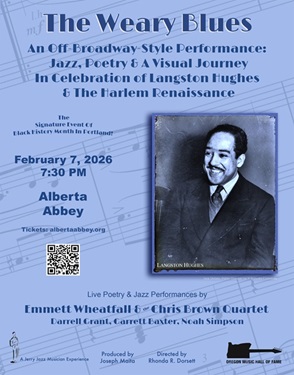
Press Release for “The Weary Blues: Celebrating The Harlem Renaissance and Langston Hughes...I recently wrote about a new endeavor of mine – producing a show in Portland celebrating the poetry of Langston Hughes and the Harlem Renaissance. What follows is the complete press release for the February 7 performance at the Alberta Abbey in Portland, Oregon.

A Letter from the Publisher

The gate at Buchenwald. Photo by Rhonda R Dorsett
War. Remembrance. Walls.
The High Price of Authoritarianism– by editor/publisher Joe Maita
...An essay inspired by my recent experiences witnessing the ceremonies commemorating the 80th anniversary of liberation of several World War II concentration camps in Germany.

Poetry

Wikimedia Commons
“Dorothy Parker, an Icon of the Jazz Age” – a poem by Jane McCarthy

Feature

Memorable Quotes: Horace Greeley, on character...“Fame is a vapor, popularity an accident, and riches..."

Community

Nominations for the Pushcart Prize L (50)...Announcing the six writers nominated for the Pushcart Prize v. L (50), whose work appeared on the web pages of Jerry Jazz Musician or within print anthologies I edited during 2025.

Interview

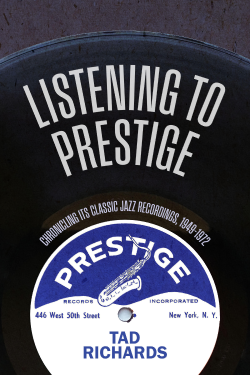
Interview with Tad Richards, author of Listening to Prestige: Chronicling its Classic Jazz Recordings, 1949 – 1972...Richards discusses his book – a long overdue history of Prestige Records that draws readers into stories involving its visionary founder Bob Weinstock, the classic recording sessions he assembled, and the brilliant jazz musicians whose work on Prestige helped shape the direction of post-war music.

Poetry

"Swing Landscape" by Stuart Davis
“Swing Landscape” – a poem by Kenneth Boyd....Kenneth Boyd writes poetry based on jazz paintings. “Swing Landscape” is written for a Stuart Davis painting of the same name.

Playlist

“A Perfect 10” – a playlist of tentets by Bob Hecht...Bob adds another instrument to his progressive playlist feature, and shares what a variety of arrangers have been able to accomplish writing for a tentet.

Jazz History Quiz

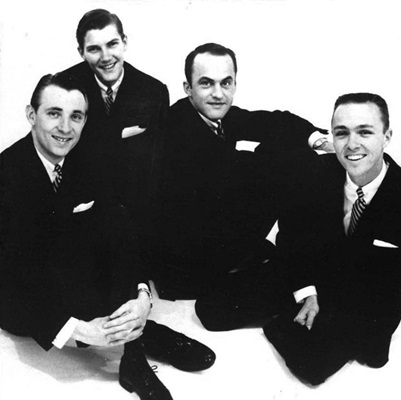
Jazz History Quiz #185...This posthumously-awarded Grammy winning musician/composer was the pianist and arranger for the vocal group The Hi-Lo’s (pictured) in the late 1950’s, and after working with Donald Byrd and Dizzy Gillespie became known for his Latin and bossa nova recordings in the 1960’s. He was also frequently cited by Herbie Hancock as a “major influence.” Who is he?

Poetry

photo via Wikimedia Commons
Jimi Hendrix - in four poems

Playlist

A sampling of jazz recordings by artists nominated for 2026 Grammy Awards – a playlist by Martin Mueller...A playlist of 14 songs by the likes of Samara Joy, Brad Mehldau, Dee Dee Bridgewater, Branford Marsalis, the Yellowjackets and other Grammy Award nominees, assembled by Martin Mueller, the former Dean of the New School of Jazz and Contemporary Music in New York.

Poetry

Ukberri.net/Uribe Kosta eta Erandioko agerkari digitala, CC BY 2.0, via Wikimedia Commons
In Memoriam: “Color Wheels” – a poem (for Jack DeJohnette) by Mary O’Melveny

Short Fiction

“Alas, for My Poor Heart” – a short story by Daryl Rothman...The story – a short-listed entry in the recently concluded 69th Short Fiction Contest – concerns art and its truest meanings—where you just might have to look twice at what the shadow and light of a piece says about that within your soul.

Essay

“Escalator Over the Hill – Then and Now” – by Joel Lewis...Remembering the essential 1971 album by Carla Bley/Paul Haines, inspired by the writer’s experience attending the New School’s recent performance of it

Poetry

“Still Wild” – a collection of poems by Connie Johnson...Connie Johnson’s unique and warm vernacular is the framework in which she reminds readers of the foremost contributors of jazz music, while peeling back the layers on the lesser known and of those who find themselves engaged by it, and affected by it. I have proudly published Connie’s poems for over two years and felt the consistency and excellence of her work deserved this 15 poem showcase.

Feature

photo of Barry Harris by Mirko Caserta
“With Barry Harris at the 11th Street Bar” – a true jazz story by Henry Blanke...The writer - a lifelong admirer of the pianist Barry Harris - recalls a special experience he had with him in 2015

Short Fiction

publicdomainpictures.net
“Corkscrew” – a short story by Mike Wilson...The story – a short-listed entry in the recently concluded 69th Short Fiction Contest – is about a night when everything goes wrong and everyone is annoying, an unexpected turn of events teaches a sarcastic lawyer that the old adage is true – a cynic is just a disappointed romantic.

Interview

Interview with Sascha Feinstein, author of Writing Jazz: Conversations with Critics and Biographers...The collection of 14 interviews is an impressive and determined effort, one that contributes mightily to the deepening of our understanding for the music’s past impact, and fans optimism for more.

Feature

Trading Fours, with Douglas Cole, No. 27: “California Suite”...Trading Fours with Douglas Cole is an occasional series of the writer’s poetic interpretations of jazz recordings and film. This edition is dedicated to saxophone players and the mood scenes that instrument creates.

Short Fiction

photo by Simon Webster
“Smoke Rings and Minor Things” – a short story by Jane McCarthy...The story – a short-listed entry in the recently concluded 69th Short Fiction Contest – is a meditation on missed chances, minor keys, and the music that outlives the room it was played in.

Essay

“J.A. Rogers’ ‘Jazz at Home’: A Centennial Reflection on Jazz Representation Through the Lens of Stormy Weather and Everyday Life – an essay by Jasmine M. Taylor...The writer opines that jazz continues to survive – 100 years after J.A. Rogers’ own essay that highlighted the artistic freedom of jazz – and has “become a fundamental core in American culture and modern Americanism; not solely because of its artistic craftsmanship, but because of the spirit that jazz music embodies.”

Community

photo of Dwike Mitchell/Willie Ruff via Bandcamp
“Tell a Story: Mitchell and Ruff’s Army Service” – an essay by Dale Davis....The author writes about how Dwike Mitchell and Willie Ruff’s U.S. Army service helped them learn to understand the fusion of different musical influences that tell the story of jazz.

Feature

Excerpts from David Rife’s Jazz Fiction: Take Two– Vol. 16: Halloween on Mars? Or…speculative jazz fiction...A substantial number of novels and stories with jazz music as a component of the story have been published over the years, and the scholar David J. Rife has written short essay/reviews of them. In this 16th edition featuring excerpts from his outstanding literary resource, Rife writes about azz-inflected speculative fiction stories (sci-fi, fantasy and horror)

Poetry

“With Ease in Mind” – poems by Terrance Underwood...It’s no secret that I’m a fan of Terrance Underwood’s poetry. I am also quite jealous of his ease with words, and of his graceful way of living, which shows up in this collection of 12 poems.

Poetry

What is This Path – a collection of poems by Michael L. Newell...A contributor of significance to Jerry Jazz Musician, the poet Michael L. Newell shares poems he has written since being diagnosed with a concerning illness.

Art

photo by Giovanni Piesco
The Photographs of Giovanni Piesco: Art Farmer and Benny Golson...Beginning in 1990, the noted photographer Giovanni Piesco began taking backstage photographs of many of the great musicians who played in Amsterdam’s Bimhuis, that city’s main jazz venue which is considered one of the finest in the world. Jerry Jazz Musician will occasionally publish portraits of jazz musicians that Giovanni has taken over the years. This edition features the May 10, 1996 photos of the tenor saxophonist, composer and arranger Benny Golson, and the February 13, 1997 photos of trumpet and flugelhorn player Art Farmer.

Community

Community Bookshelf #5...“Community Bookshelf” is a twice-yearly space where writers who have been published on Jerry Jazz Musician can share news about their recently authored books and/or recordings. This edition includes information about books published within the last six months or so (March, 2025 – September, 2025)

Contributing Writers

Click the image to view the writers, poets and artists whose work has been published on Jerry Jazz Musician, and find links to their work

Coming Soon

Interview with John Gennari, author of The Jazz Barn:  Music Inn, the Berkshires, and the Place of Jazz in American Life; Also, a new Jazz History Quiz, and lots of short fiction; poetry; photography; interviews; playlists; and much more in the works...

Interview Archive

Ella Fitzgerald/IISG, CC BY-SA 2.0 , via Wikimedia Commons
Click to view the complete 25-year archive of Jerry Jazz Musician interviews, including those recently published with Judith Tick on Ella Fitzgerald (pictured),; Laura Flam and Emily Sieu Liebowitz on the Girl Groups of the 60's; Tad Richards on Small Group Swing; Stephanie Stein Crease on Chick Webb; Brent Hayes Edwards on Henry Threadgill; Richard Koloda on Albert Ayler; Glenn Mott on Stanley Crouch; Richard Carlin and Ken Bloom on Eubie Blake; Richard Brent Turner on jazz and Islam; Alyn Shipton on the art of jazz; Shawn Levy on the original queens of standup comedy; Travis Atria on the expatriate trumpeter Arthur Briggs; Kitt Shapiro on her life with her mother, Eartha Kitt; Will Friedwald on Nat King Cole; Wayne Enstice on the drummer Dottie Dodgion; the drummer Joe La Barbera on Bill Evans; Philip Clark on Dave Brubeck; Nicholas Buccola on James Baldwin and William F. Buckley; Ricky Riccardi on Louis Armstrong; Dan Morgenstern and Christian Sands on Erroll Garner; Maria Golia on Ornette Coleman.