
.
.
..
Trading Fours with Douglas Cole is an occasional series of the writer’s poetic interpretations of jazz recordings, theater, and film.
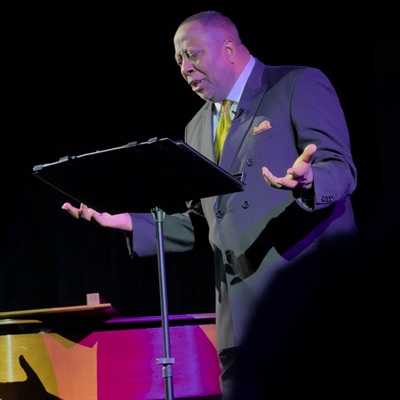
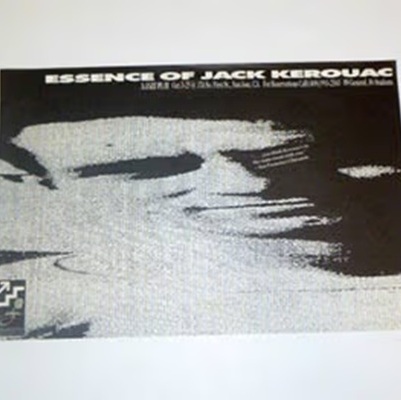
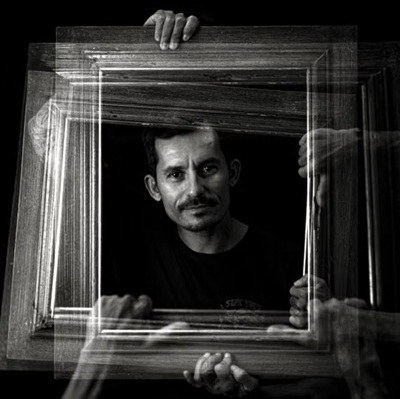
This edition is inspired by the Seattle performance of the one man play by Vincent Balestri titled “Essence of Jack Kerouac.”
A recording of Douglas reading his work (accompanied by the guitarist Bruce Bond) is found at the beginning of the poem.
.
.
___
.
.
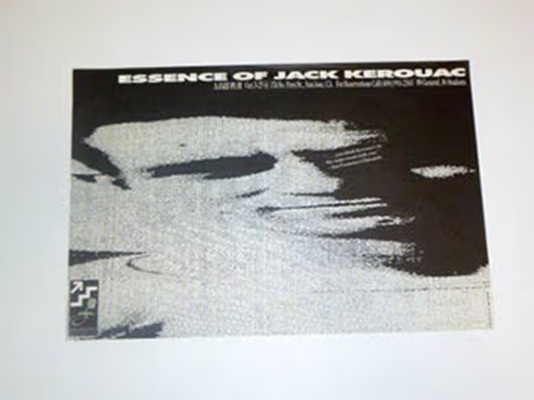
A poster for the performance of the Vincent Balestri one man play, Essence of Jack Kerouac: A Jazz Play
.
___
.
Listen to Douglas Cole read “Theaters of Spirit and Flesh,” accompanied by the original music of Bruce Bond, who plays an Ennio Giovanetti classical guitar. His original piece is titled “Chavala.” [Engineering by Daniel Howington]
.
.
Theaters of Spirit and Flesh
Streets were skid-row and lost children,
new music exploding this-is-the-place-to-be
in cool October with air of coffee
and in-seeping fog and fog horns,
and seagulls riding in from ocean journeys
to big-flock feeding out of dumpsters
along First Avenue—I was wide-eye
open to those blooming ragged alleyways
with old halls and church meeting rooms
where traveling troubadour groups arrive
and take over with their guiding spirits
magic and prayer circles, weird scenes
like in Laughing Moon Company’s
“Talisman,” with a figure entirely in black
and stage black so you barely see anything
except a television screen on a rolling table
the one in black pushes across the stage,
as the screen reveals a bed and another TV
inside looking through into a 1950’s flophouse
with gray windows you can’t see out of,
as the world-looking eye moves on now
only interested in one stoplight swinging
there in the wind at an empty crossroad
with that somber music playing…
and the Erikson’s got “Seven Guitars” running,
while August Wilson pushes away
a plate of eggs at the Five Spot Café,
finishing “How I Learned What I Learned”
that he passes on to another actor in the flesh,
saying, “Tell my story—I’ll show up,”
and that actor sings his story well and true…
downtown somewhere in a little black box
among brick buildings of Pioneer Square—
wading knees-deep in swirling retrograde’s past
with those first floors now underground,
and tours you can take and stories hear
of walls thrown up along the sidewalks
and ladders to the street above soon after
those little gray stickmen in the photos
together en-masse by pick and shovel
earth-pushed down the hill to make more land,
tumbling with horse bones and carriage wheels,
and anything they threw out the windows,
where now a guy puts on a one-man show:
“The Life and Times of Jack Kerouac,”
and he had it, that voice, and that tone,
the movements of the long-gone author,
and riff-spun lines some accurate and true—
it was like seeing a ghost come to life—
an actor devoted to read everything
by and about the famous poet-writer,
but instead of a dissertation for a PhD
he chose to write a play, and by all that
book-learning made a character-vessel
the poet climbs into for an hour or two
and touches the earth again, feels breath
in the lungs and sings new-bodied and clean
with forgotten work and words now fresh
on the tip of the tongue, fiery genius indeed
more alive than ever with love doubled
by a doubled heart—he gave it all,
both actor and bard, at once luminous
and spooky, too, what we’re witnessing,
a sacrifice combined with a resurrection
there before our eyes I now realize,
and maybe I saw the actor again
in the world, on a bus or at the Crocodile
with stoned Gary and his cordless guitar,
or taking notes later on from Wilson,
after the show ends and spent-empty
he drags himself through doorways
and shadows and red sirens wailing,
to a one room apartment to fuel up
on television, horoscopes and bong hits,
depleted old self nothing but a glimmer-coal
beneath a bed of glorious ashes
there for a moment then blown away.
.
.
___
.
.
photo by Jenn Merritt
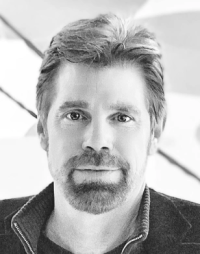 .
Douglas Cole has published two novels and eight poetry collections, including The Cabin at the End of the World, winner of the Best Book Award in Urban Poetry and the International Impact Book Award. The White Field won the 2021 American Fiction Award, and his screenplay of The White Field won Best Unproduced Screenplay award in the Elegant Film Festival. He has been nominated Eight times for a Pushcart and Nine times for Best of the Net. Click here to visit his website.
Douglas’ poem, “What We Talk About When We Talk About Kind of Blue,” published as part of his “Trading Fours” series, was nominated for the XLVIII Pushcart Prize
Click here to visit his website.
.
.
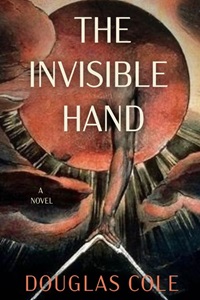
Douglas Cole’s new novel, The Invisible Hand
.
.
___
.
.
Bruce Bond is the author of 37 books including, most recently, Vault (Ashland, 2023), Lunette (Green Linden, 2024), The Dove of the Morning News (U of NV, 2024), The Silent Conversation (Cloudbank Books), and The Plural of Water (LSU, 2026), plus two books of criticism: Immanent Distance (UMI, 2015) and Plurality and the Poetics of Self (Palgrave, 2019). His honors include the Juniper Prize, Richard Snyder Award, Test Site Poetry Award, New Criterion Poetry Award, Nicholas Schaffner Award for Literature in Music, Crab Orchard Book Prize, Wishing Jewel Editor’s Award, Elixir Press Poetry Award, Tampa Review Book Prize, two TIL Best Book of Poetry awards, fellowships from the NEA and the Texas Institute for the Arts, and seven appearances in Best American Poetry. A graduate of the Lamont School of Music, Bruce Bond has performed numerous guitar styles for the past forty years. His teachers include guitarists Christopher Parkening, Angel Romero, Ben Verdery, and Ricardo Iznaola, jazz musicians Karl Berger, Leo Smith, Bill Douglass, Paul McCandless, and Joseph Jarman, and the composers Donald Keats and David Diamond. However, it is his mentor Ralph Towner who most influenced his style of improvisation, which blends elements of jazz, folk, and classical music.
Website: brucebond.com
.
.
Listen to the 1959 recording of Jack Kerouac and Steve Allen (piano) performing his poem “October in the Railroad Earth.” [Rhino]
.
___
.
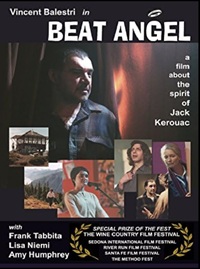
Click here for the IMDB page for playwright Vincent Balisteri’s film Beat Angel, described as “The angelic spirit of writer Jack Kerouac returns to Earth to change the life of a writer.”
.
.
___
.
.
Click here to read previous editions of Trading Fours with Douglas Cole
.
Click here to read The Sunday Poem
Click here to learn how to submit your poetry or short fiction
Click here to subscribe to the free Jerry Jazz Musician newsletter
Click here to help support the continuing publishing efforts of Jerry Jazz Musician (thank you!)
.
.
___
.
.

Jerry Jazz Musician…human produced since 1999
.
.
.