
.
.
“Luminous” was a finalist in our recently concluded 72nd Short Fiction Contest, and is published with the consent of the author.
.
.
___
.
.
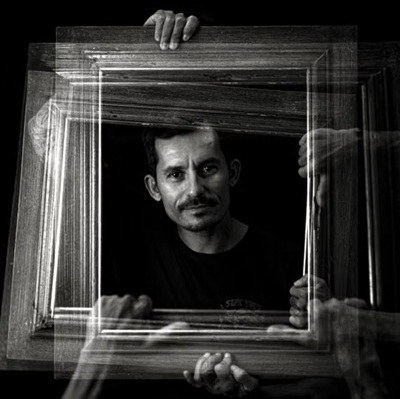
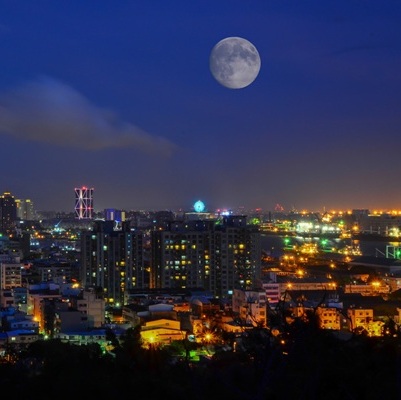
photo by George Desipris/via pexels.com
.
Luminous
by Francis Fernandes
.
…..I was standing in line for the next concert in the Palmengarten summer jazz series, which happens to be the longest continuously running open-air jazz series in the world.
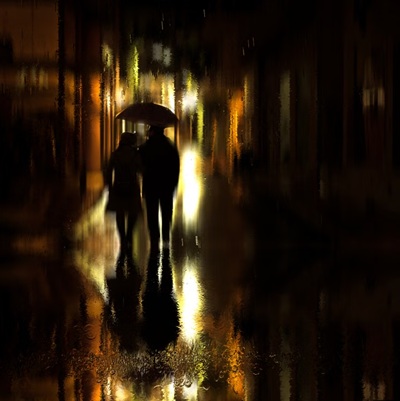
…..The rain had just burst through the unbearable heat, like floodwaters breaking a dam. And that’s when I saw them. Their lips grazed each other, tentatively, awkwardly. I could tell it was the first time. I knew it was the first time because I too had been like that once.
…..The rain had come suddenly—unrelenting, in big drops. Then in buckets. Only one of them had an umbrella. I assumed it was hers. It wasn’t much of an umbrella. He lifted it above their damp heads as though it had grown out of his arm. He was like a denuded tree trying to keep them both dry. I was surprised the sorry contraption held up in this deluge.
…..I stood alone under a similar skimpy carcass that hardly deserved the term parapluie.
…..I stood there like an extra in a cinema verité film.
…..Despite the weather, no one relinquished their spot in the line. Jazz legends from every direction and every style have played here, among the lush greenery of this botanical garden, and as usual the offering was impressive. The music in those weeks was a kind of reprieve. The steamy air resounded with lean guitar riffs, sensuous saxophone wails, and sweaty, thumping rhythms. And now, finally, the rain had broken through.
…..It was when I turned to see how everyone else was coping with the heavy rainfall that I couldn’t avert my eyes from this deeply private moment developing not ten feet down the line. I was probably the only observer. Everyone else was either too busy cussing at the sky or yanking rain gear from their bags and wrestling with it frantically. Or maybe they were simply better at minding their own business.
…..But I saw it. I must have even stared for a few seconds. As I said, I couldn’t help it.
…..My eavesdropping knew no limits. Before the skies opened—before their watershed moment, so to speak—I’d caught snatches of their conversation: fumbling small talk about how they’d cleaned their respective places earlier that day, what meals they’d prepared in the kitchen, and the stress of it all. This was clearly a very young date. They looked like students, or interns—judging from their faded jeans and scuffed canvas sneakers.
…..Now, though, as I edged from staring to glancing, I didn’t hear the things they whispered. Their lips appeared to be whispering—at least between the brushing of ears and cheeks and bashfully lowered eyelids. The rain was loud enough to cover up their words, drumming and dripping as it was amid the linden’s luminous tangle of leaves.
…..It’s not as if there was a shortage of diversions. In fact, I knew that coming here meant letting yourself be gathered up into the garden’s layered history of music. Once, I met an elderly couple who told me about the evening Bill Evans performed. Sharing their bottle of wine with me, they spoke about that concert with awe and excitement—while I pondered how all those sad notes might have sounded in such an exotic location. They also described in detail other evenings with other jazz stars, each time with a wan smile and raising their glasses as though toasting the artists and their music—music that still lingered in the surrounding flora perhaps. The soft lines of their faces and the light in their eyes spoke of a love of music and tradition. To me it was a minor miracle how all of these legends contributed—in that uniquely mysterious way music enriches the world—to the patient growth of hundreds of species of trees and plants. And it’s true: every year, through July and August, the evenings thrum and pulse in this vine-strewn park, where mynas and parakeets weave their calls into the brass and bass lines blooming from the shell-covered stage before rising into the sultry summer air.
…..The rain refused to let up for at least a quarter of an hour. I decided it was pointless to reach into my own bag for that extra shirt I’d brought. It would only get soaked. Besides, the rain felt like a relief. So I waited it out.
…..My eyes wandered as the rain kept falling. That sort of shy, rain-soaked closeness wasn’t even so long gone. I’d been no stranger to intimacy. And yet now I was the kind of person who pursued his passion for jazz and renaissance lute music. I had become the type who packed a drink for an event like this one. I had diligently made myself a sandwich—after vacuuming and doing the dishes—and had even made a sandwich for her too, although I doubted she would come. What am I saying? I knew she wouldn’t come. She had already slipped out of my life.
…..One vérité about this film was that extras—or even cameramen—seldom got a supporting role, let alone the main part.
…..Just to make sure, though, I checked my messages. But that only reminded me how she resented my own resentment of these sly devices. So I slipped the thing back into my backpack. I might have been slow on the uptake, as she once pointed out, but I knew very well that the truth of modern electronics could not be the cause of all endings.
…..The rain fell, my thoughts drifted, and all at once I caught the dour tone of the bard and his tomorrows creeping—like a distant knocking. I smiled to no one in particular after it dawned on me that my own brief entanglements were the comic inverse of this place’s long, unbroken jazz lineage.
…..Then I was reminded of that old river adage—how you can never step foot in it twice. But this notion struck me as wholly absurd. Wasn’t that the most obvious thing in the world—that nothing stays the same. Except time itself. Except some things do stay the same. Except maybe you’re one of those doomed sailors who find themselves placidly travelling down the Rhine, admiring the beautiful scenery, until the fateful bend appears where the music finally gets to them.
…..But that’s rivers for you. And now the tunes began to play, pulling me into the music of rivers. There was Herbie Hancock strolling by the shore, singing to Joni with gratitude and love. A soft, murmuring Sarabande in the sun, turning into ice-skate strides by cold moonlit nights. I heard Monk’s joyful jaunt down the Hudson—his buoyant Bright Mississippi. Without noticing, I started tapping my foot to his oddly syncopated beat. My head was bobbing as if trying to stay afloat in the rain. I held on to that useless frayed canopy over my head, remembering how, in another world across the ocean, my father used to say that all I did was watch and listen and nod. Pools of water formed around my feet while Keith Jarrett’s contemplative Ol’ Man River ebbed and flowed with a familiar ease. Even the Boss’s bruised River rasped and chimed through the hungry landscapes of the past.
…..And above all that, birds were chirping—almost gurgling, like drowning whistles.
…..Then, as if on cue, who else should gatecrash the serenity but the man himself, Buster Keaton. His steamboat antics did a very undignified but blessed Charleston through my head, followed by the thought that nothing is more ludicrous than the way we put free will into action by standing in pouring rain simply to secure a good vantage point in front of a stage. A stage for others, no less. Yes, this was world-class jazz, but still.
…..Then I felt a bump on my left calf and my leg buckled. I almost lost my balance. The fan behind me apologized, before saying something about the line moving forward. I offered a half-hearted chuckle. I said something inane, then adjusted my bag on my shoulder and advanced with the others.
…..The people around me, anticipating the music, seemed to lift a little. Or maybe it was more basic than that: maybe it was simply the knowledge that the thicker vegetation waiting beyond the garden’s gate made for better protection against the elements.
…..During our last meal together, I had taken out one of my prized LP’s: Ike Quebec’s 1962 slick Blue Note recording of Soul Samba. It turned out she had never heard it before. She liked it from the first slow, graceful notes. We flipped the record over, again and again. We even swayed a little, in the middle of the room, for a minute or two. And yet in the end, despite everything, despite even the wine from the Loire that was as velvety as the lush, seamless music drifting around us, this would be the last time we shared a meal. The last words I read on my phone, a few nights later, were simply: The soul should always stand ajar.*
…..So how could I not help but ruminate on that album now? More precisely, on Quebec’s smooth and mellow tenor. I heard it clearly in some carved-out chamber of my temporal lobe. And then, like an unseen bird crying out at dusk, one of the more rueful tracks—Goin’ Home—rose above the others.
…..The melody, of course, comes from the Largo in Dvořák’s Ninth Symphony. I followed the solo English horn, like a pilgrim on a gentle current, as it carried that line in D-flat major. I heard how it was yearning for home. Yet Quebec’s saxophone transformed it into something meditative and elegiac, into a whispery foreshadowing of his own death. When he recorded this achingly tender music, he already knew the cancer would take him within months; he wouldn’t live past the age of forty-four.
…..Foolishly, I wondered where it was our luminous days had disappeared to. How we went from here to there without so much as anything solid to grasp onto. A raft or a barge—or some lousy tree limb.
…..I wished I’d learned something from my father, all those years ago, when he said, Don’t stare.
…..Later on, I saw the radiant pair one more time. Three or four pieces into the show. The trombonist was nearing the bridge in one of his solos, and I spotted them picking their way through the crowd back to the entrance in what looked like a state of measured grace. Unflinching before the shimmering disarray of singers and players. And faintly murmuring ghosts all around. They’d emerged from their splintered sanctuary, felt the intimacy of improvised art, and were now moving towards freedom and renewal.
…..I looked at their hands and noticed they’d left something behind. They were about to flow out into the streets without that flimsy accessory, that parapluie pitoyable. I imagined they’d discarded it with a sense of relief.
…..I couldn’t even remember when the rain had stopped.
…..As for me, somewhere near the onset of the show I’d been caught off guard by the incessant buzzing and vibrating inside my bag. The bugs circling my head in the humid air weren’t nearly as bothersome. I pulled out the damned thing and jabbed at it, like a frenzied stork in a gale. And in the sudden confusion, I accidentally shut it off. I knew, of course, I couldn’t just toss it. But as the music from the stage grew, filling the redemptive dusk, a wave of solace swept through me.
*The soul should always stand ajar is from a letter by Emily Dickinson.
.
.
___
.
.

Francis Fernandes grew up in Montreal and now lives in Frankfurt, Germany. His work has appeared in over forty journals, among them Book XI, Saint Katherine Review, Jerry Jazz Musician, The Orchards Poetry Journal, and Third Wednesday. He is a Pushcart Prize nominee.
.
.
___
.
.
Click here to help support the continuing publication of Jerry Jazz Musician, and to keep it ad and commercial-free (thank you!)
.
Click here to read “La Fontaine,” Ashlee Trahan’s winning story in the 72nd Jerry Jazz Musician Short Fiction Contest
Click here to read more short fiction published on Jerry Jazz Musician
Click here to read The Sunday Poem
A Letter From the Editor: On “The Weary Blues: Celebrating Langston Hughes and the Harlem Renaissance”
Click here for information about how to submit your poetry or short fiction
Click here for details about the upcoming 74th Jerry Jazz Musician Short Fiction Contest
Click here to subscribe to the Jerry Jazz Musician quarterly newsletter (it’s free)
.
.
.
___
.
.

Jerry Jazz Musician…human produced since 1999
.
.
.