



.
.

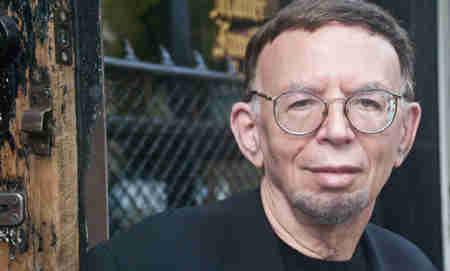
David Evanier, author of Roman Candle: The Life of Bobby Darin
.
___
.
As a performer, Bobby Darin rivaled Frank Sinatra. Energizing the early rock-and-roll scene with his rollicking classic “Splish Splash,” Darin then became a top-draw nightclub act. Chronic illness dogged him from childhood, setting the tone of urgency that inspired a career full of dizzying twists and turns: from teen idol to Vegas song-and-dance man, and from hipster to folkie and back.

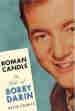 In Roman Candle: The Life of Bobby Darin, author David Evanier tracks Darin’s meteoric rise from dire poverty as the grandson of a low-level mobster to his well-earned place in the showbiz pantheon.#
In a June, 2005 interview, Evanier talks with Jerry Jazz Musician publisher Joe Maita about Darin’s short and complex life, and makes a case that this gifted artist’s spirit is as alive today as ever.
.
.
_______
.
.
.
“His was a raw, restless, cerebral talent, derived from a life steeped in music and performance history. Coming from the streets, he came to the blues naturally, not as exotica. It had the immediacy and urgency of real life. He had so little time, it spoke to him. He didn’t have time for teenage bullshit or polite subterfuge; he would make it big, or he would die trying.”
– David Evanier
.
Listen to “Beyond the Sea”
.
.
_____________
.
.
JJMYou write that Bobby Darin told a friend of his, “The key to me is that I don’t belong anyplace. I don’t belong in the streets of the Bronx, in high society, or suburbia. I don’t belong among beatniks, and I sure don’t belong in hotel suites.” Where did he see himself belonging as a teenager?
DE As a teenager, Bobby went to Bronx Science, which was the most prestigious high school for students referred to in those days as “the brains.” He was very poor, and grew up in an Italian neighborhood in the Bronx and on the lower East Side of Manhattan. He had rheumatic fever as a child and was bedridden for a long time, which gave him a lot of time on his own to think and read. It started him on the path of being the perennial outsider. He became a rocker at the start of his career only as a means to an end, because his real love was with the Gershwin, Harold Arlen, Irving Berlin songs the standards.
Bobby grew up in a very loving, proletarian Italian family, but he was much more precocious and intellectual than they were. Bronx Science was a school made up primarily of Jewish kids with very high IQ’s, and he began to see life from a new perspective, and particularly regarding issues like racism. As a kid he would hang out on the corner and make racist comments along with the others in the neighborhood, but it was pointed out to him by the students of Bronx Science that this was wrong. He spent a summer pondering this issue and came out of it a changed person. So, Bobby was an outsider in every respect.
JJM And of course there was the issue of him not knowing his “sister” was actually his mother …
DE Yes, he found out later in life that the woman who raised him as his “mother” was actually his grandmother, and the person he knew as his “sister” was actually his mother. But it seems to me that this knowledge didn’t really come at age thirty-five, when most people think it did. Harriet Wasser, who was Bobby’s publicist and who knew him better than anyone from the beginning, believes that Bobby really did know that the arrangement told by his family was not the reality.
JJM It is hard to imagine how he couldn’t have known. I don’t know how you keep a secret like that for thirty-five years.
DE Exactly. To continue on this outsider status theme, his grandmother, Polly Walden, was quite different from the rest of the family; she loved poetry and taught it to Bobby, and she took him to plays and to the music halls. Also, she was not Italian she was Irish-German which was an unusual influence within this family. Polly was quite ill herself, so she took very good care of him when he was bedridden, but this closeness created an alienation of sorts from the rest of that family.
When Bobby was sick with rheumatic fever, he overheard doctors speak of the likelihood of an early death, so he felt doomed, and was physically unable to do things that others easily could. He couldn’t ride the subways because he couldn’t climb stairs, and Charlie Maffia who was his “sister’s” husband which actually made him his stepfather would have to drive him around the city. In so many ways, Bobby’s was a very divided personality.
JJM Given Bobby’s high level of intelligence and success in school, did any of the family members have aspirations for him other than being an entertainer?
DE No, he was the apple of their eye, and they loved him ferociously. His becoming an entertainer was something they could understand, as opposed to if he had aspired to becoming a writer or an intellectual of some sort. They adored him and wanted him to become a performer, so his career choice was a perfect fit.
JJM What were his first experiences as an entertainer?
DE He formed his own group and began working summers in the Catskills when he was fifteen. That was his first experience as an entertainer. He was an all around man there. During the days he would take care of the candy stand, and at night he would put on a show with the other kids.
JJM It was at this time that he had a falling out with Steve Karmen, his performing partner who Darin felt was stealing his thunder.
DE Yes. Karmen later became a writer of jingles. He actually wrote a memoir that dealt with their jealous relationship. After the Catskills, Bobby’s first booking was in Detroit, and he took Steve along basically as a security blanket. Bobby was very insecure about his appearance and thought he was ugly, and Steve was this very tall, blonde, handsome man who flirted with the girls in the audience. Bobby thought he was detracting attention from his act, and dismissed him rather brusquely at a very early stage in his career.
JJM What did early admirers of Darin like Harriet Wasser find appealing in him?
DE Harriet Wasser fell in love with Bobby before she ever heard him sing. She found him in Hansen’s Drug Store, where he was the charismatic center of a group of fledgling singers, comedians and actors. She just sensed a unique quality in him, and became enthralled by him. Harriet had a lifelong knack for discovering talent, and her career included working very closely with Sammy Davis, Jr, who she introduced Bobby to, and who became a big supporter of Bobby’s. A similar situation happened with Steve Blauner, who became Bobby’s manager in a pretty interesting way. Steve was working as an agent for the General Artists Corporation, during which time he became quite friendly with Sammy Davis, Jr. so friendly that the agency believed he was going to steal Sammy away from them. When he heard about Bobby Darin through Harriet Wasser, as an act of revenge he became Bobby’s representative basically without even having seen him sing. In both of these cases, in the strange ways that life works, the two most important people in Bobby Darin’s life became involved with him before they ever heard him sing.
JJM It is amazing how quickly his star rose. Ahmet Ertegun said of Darin, “We at Atlantic had tried to get Presley but it didn’t work out. So to me this was the answer. I had somebody as good or better.” That is quite a statement to make
DE Ertegun and Jerry Wexler tell the same story of the time they heard someone doodling on the piano outside their offices, thinking that it was Ray Charles, but in fact it was Bobby. They were astounded. Bobby recorded an enormous hit with “Splish Splash,” which was a quite wonderful rock song that he wrote himself, but when he wanted to sing standards, Ertegun and Wexler of Atlantic Records were very much opposed to that because they felt making this switch right at the time he was creating a dramatic impact was an insane career move. In fact, Bobby had to finance that first recording, “That’s All,” with the royalties he made from “Splish Splash.”
JJM Later on Wexler said, “The Sinatra-styled ‘Mack the Knife’ and ‘Beyond the Sea’ proved that Bobby could swing in styles ranging from rock to big band-jazz.” Why did he want to sing “Mack the Knife?”
DE Part of it was because he was influenced by the Louis Armstrong recording. Also, Darin was always interested in turning things upside down musically. “Mack the Knife” was more or less a dirge; the song was Germanic, and it was about a murderer, and it is possible that he was drawn to the song because it was about death. He turned “Mack” into the wildest kind of celebration that, in a way, conquered the fear of death. His interpretation defied death; while its lyrics had death lurking around the corner, here was Bobby turning its very dirge-like melody into something joyous and wild. I believe that may be a reason why he was so attracted to this song.
JJM Who was responsible for arranging that song?
DE Richard Wess, who also came to Bobby through Harriet Wasser.
JJM The Sinatra comparisons were inevitable after the success of “Mack the Knife” and “Beyond the Sea.” How did Sinatra view Darin’s talent?
DE Well, there are many variations on this story. There are those who say that Sinatra was threatened by him, there are also those who say Sinatra really admired him. He would say things like, “Bobby Darin does my prom dates,” and Bobby would reply, “Yes, until I graduate.” Sinatra had a conversation with an actor named Dick Bakalyan in which Sinatra is claimed to have said that Bobby was a wonderful talent whose primary skills were displayed on stage. In other words, it was a stage talent that didn’t always translate on recordings in the way that Sinatra’s did.
JJM Yes, Bakalyan quoted Sinatra as saying, “If you could get what Bobby did onstage bottled, captured in its fullness and richness where you could share it with the whole world, it would be an amazing thing.”
DE Right, there is the notion that some performers’ magnetism does not extend beyond their time on stage. I don’t think it is true at all in Darin’s case because he recorded a substantial number of songs that are enduring, and that possess the power and ferocious drive of those made by Sinatra.
JJM From the accounts in your book regarding this topic, it seems as though Darin was always very respectful of Sinatra and was careful to never say anything that would lead one to believe he felt he was a greater talent than Sinatra. There was an incident you quote Steve Blauner as saying, “After the [1959] Grammys, we were walking through the lobby of the Beverly Hilton. We were stopped by Vernon Scott, a reporter for the United Press. He says to Bobby, Do you want to be bigger than Frank Sinatra? Bobby says to him very respectfully, Why would you ask me that? Were a different generation. All I want to do is to be the biggest and best Bobby Darin I can be. Scott said, Well, you want to do everything that Sinatra has done. Again, Bobby replied, Its not fair. What does one thing have to do with the other? I want to do whatever I can do. The next day which I loved, of course in 2,000 papers across the country, the headline read: Darin Wants to Be Bigger Than Sinatra. Scott claimed Bobby had said, I hope to surpass Frank in everything hes done.” This may have stirred in Sinatra a feeling that Darin didn’t respect him properly.
DE The overriding evidence is that Sinatra respected Bobby. Bobby had a very short run, about fifteen years or so, and Sinatra didn’t have all that much time to comment on Darin one way or the other. Look at how generous Sinatra was toward Tony Bennett over the years, but Tony had many more years to develop, and in the end Sinatra’s gestures toward Bennett from one artist to the other were extraordinary. Sinatra was by no means ungenerous toward Bobby.
The crowd that Sinatra ran with the “Rat Pack” never really accepted Bobby. While they loved and respected him in a way, they considered him to be an upstart and a rocker, which Sinatra detested. Bobby was too much of a rock performer to fit in with them. On the other side, the rockers looked upon him as being too “Las Vegas” for their crowd. Mick Jagger and the Rolling Stones treated him with contempt and laughed at him when they met. Darin’s being caught between these two worlds is another example of his outsider status.
JJM Of Darin’s live performances, the singer Steve Lawrence said, “You really had to see Bobby in person to know the magnificence of him as a performer.” What was he like as a performer?
DE He was magnetic beyond belief. He moved like a dancer, and he gave everything he had. Ron Cannatella, a New Orleans disc jockey and singer, described Bobby as the past, present and future of entertainment, and that if you rolled up every great variety performer and song and dance man into one, you would get Bobby. Darin had a lot of swagger, great timing and he owned the stage. He did great impressions, was a terrific comic, and played seven instruments all on stage. It is safe to say that he was one of the greatest performers in the history of show business. I know that Sammy Davis, Jr. regarded him that way because he said that Darin was the one performer he would not follow on stage. Bobby put everything he had into the performance, and afterwards, because of his physical condition, toward the end he would crawl on his hands and knees back to the dressing room.
JJM There was a story in your book that I have to ask you about. Terry Koenig, the sister of Bobby’s second wife, described how she would put condoms out for Darin before every performance, and said that performing “was such a turn-on for him that sometimes he actually ejaculated.” Is there any truth to this? I mean, it seems so preposterous …
DE Since I wrote the book I have heard another story. I recently spoke to someone who said that, because of Bobby’s many medical difficulties, incontinence may have been the explanation for the condoms. When I first heard the story about his ejaculating while on stage I was knocked out by it because there really are moments on film of him getting carried away with the microphone where he appears to be over the top. I don’t know what the truth of the matter was, but I know if it were possible for anyone, it would have been Bobby. But, the incontinence is certainly an alternative explanation.
JJM Frankie Avalon said of Darin, “When he looked at good-looking singers, it was ‘Jesus I would like to be that handsome guy,’ but he wasn’t. But then he’d walk into a room and just light it up with his charisma.”
DE Yes, the other story like that is when he told Steve Blauner that when he looks into the mirror he would see a double-chinned, ugly Italian man, but when he walks into the next room he is Clark Gable. Bobby had a very low self-image. He looked great on stage, and like many singers, they become transformed on stage, but he truly did not have a very high self-estimation of his appearance.
JJM How was he able to manipulate his image with the public in order to get around this low self-esteem issue?
DE Well, he was a performer who also radiated tremendous sexuality. Women would often toss their hotel room keys to him on the stage
JJM Did he make use of them?
DE He sure did. Bobby was a swinger, and his sex life was prodigious. I write in the book of a swinger’s club in Malibu Maidstone where he would go to late at night and join in with all the writhing bodies on the floor. His fear of death and his urgency to experience sex seem to be linked together. He had a very short time, and he wanted to do it all. Also, his fear of death was the pressure that drove him, and I think that helped contribute to the electricity of his performances.
JJM Regarding his love life and sex life, the columnist Rona Barrett wrote, “One day Bobby and I were talking about what it was like for him to fall in love with Sandra. I think a part of it was his reaching for the stars. He wanted to be married to the number one American dream, and he made that happen. He got to sing with Judy Garland, Sammy Davis Jr., Durante, and George Burns, and he married America’s sweetheart.” Was there a genuine love connection in Darin’s interest in Sandra Dee, or did he view her marrying her as another career goal?
DE My personal feeling is that there was a love connection, but having the American screen princess for his own was part of Bobby’s scenario for conquering the entertainment world, and for that reason there may have been a great deal of calculation in his pursuit of her. I do believe there was a great tenderness between Bobby and Sandra. Bobby was not an exploiter of women, so I come down more on the side of thinking that he had genuine feelings for her.
JJM Their relationship ended due to a number of issues for one, she appeared to be extremely jealous of his success and of the time he spent with other people.
DE She was hermetic. She was very isolated as a child and didn’t know how to socialize, nor did she like the world of show business. Also, as a child she had been sexually abused by her stepfather, which of course affected her deeply. Their marriage wasn’t even consummated for three weeks Bobby actually spent his honeymoon listening to Ray Charles.
JJM Did he have a sexual relationship with Sandra’s mother before pursuing Sandra?
DE That is the side of the story that suggests that everything about the courtship of Sandra was calculated, and that he got to Sandra through her mother.
JJM That is an interesting approach, isn’t it? As desperate as I once was, I have to admit I never thought of playing that hand …
DE Well, her mother resented him for the rest of her life. It was such a meteoric ride to the top for him. By the time he was twenty-three or twenty-four, he was at the top. The royalty of show business accepted him from the beginning. You don’t get to this point without pulling out all the stops and doing anything and everything that you can. Then he pulled back from this and the civil rights phase of his career began, and in a way, he turned his back on everything he had achieved.
JJM What was Hollywood’s impression of him as an actor?
DE I don’t think he was that good of an actor, but he didn’t really have that many opportunities. Most of his movies were fluff, but he did make an impression, and was nominated for an Academy Award in Captain Newman. He was best at playing tortured outsiders, like the psychotic nazi in Pressure Point. During the filming, Bobby used to go to Sidney Poitier’s home to be tutored. It is very hard to judge that part of Bobby’s career because it was so short lived. Sinatra probably did best at playing himself as Private Maggio in From Here to Eternity. I think you can say the same about Bobby that he did his best playing imagined aspects of himself in those two movies, Captain Newman and Pressure Point.
Bobby could do anything, but we are talking about a life that was cut very short. You cant say, for example, the magnificence of Sinatra’s later phases of his career were better than Bobby’s because Bobby never lived long enough to reach that point. It is amazing what he did do in the time that he had. What Sinatra achieved in a lifetime Bobby did as much as he could in his thirty-seven years.
JJM He decided to stop performing in 1963, and there was much speculation about the reasons for this. It may have been due to his marriage, or to the downturn in the nightclub business as rock emerged. What is your sense about why he retired at that time?
DE The 1963 retirement was his first retirement. Steve Blauner talks about how the nightclub business was shriveling, and Bobby was depressed by that. And yes, there was pressure from Sandra, who wanted him to stay at home. There were also his physical limitations, which eventually led to his collapsing on stage. So, there were any number of reasons for that particular retirement, but the medical ones were probably most influential in his decision to slow down and move away from a business that was declining anyway.
JJM He got involved in music publishing following this…
DE Yes, once he retired he decided to concentrate on songwriting and publishing, and had already purchased Trinity Music from his former managers Joe Csida and Ed Burton. He invested $500,000 in developing the business, and renamed it T.M. Music, and had gathered songwriters like Arthur Reznick, Rudy Clark, Terry Melcher, Frank Gari, Debbie Stanley, and Kenny Young.
JJM You spoke earlier of his interest in civil rights, which is an incredibly interesting part of his biography. Did he have a true understanding about the potential of his political impact, especially as it relates to African Americans?
DE He had a grandiosity about it. In the book I tell the story of his desire to go to Watts to express his solidarity with African Americans at a time when a white performer would not be welcome there, and how Rudy Clark, a black songwriter who worked with Bobby, locked Bobby’s clothes in the closet to prevent him from going. They ended up having a fist-fight over the fact that Bobby wanted to go and Rudy thought he was crazy for wanting to go.
Bobby always meant what he said, and there was a passion to anything he got involved in. When he said he really wanted to do it, he really wanted to do it. He became friends with Dr. Martin Luther King and Bobby Kennedy, and was thinking about going into politics, but I don’t think he had a realistic reading of what his role could be. His motives were very sincere and authentic, because, after all, he came out of poverty, and he was very deeply affected by black music — Ray Charles was his favorite singer, by far.
During the war in Vietnam and the civil rights movement, Bobby would go on marches anonymously; he was not looking for glory or publicity. These social concerns caused him to believe that his Las Vegas show business act was plastic, false and phony, especially in light of the times. There was something very moving about this, and it displays a deep level of his thoughtfulness. I quote an anonymous source in my book someone who knew the Rat Pack very intimately as saying that Bobby’s intelligence was infinitely superior to all of them. It isn’t likely that this kind of social consciousness would have occurred to Dean Martin or Frank Sinatra, although Sinatra did have a lifetime of commitment to civil rights.
JJM Well, they knew where their bread was buttered. Darin, on the other hand, was conflicted because he was making enormous amounts of money from one end of the political spectrum of the era he performed in, when his heart lay in another. I don’t imagine that was a conflict the likes of Sinatra or Martin had to deal with.
DE Exactly. There was also a lot of rage in Bobby that was related to his illness and to his tremendous hostility toward his family. These are contradictions that are not easily explained. If you think about the type of compassion required of someone with the level of interest Bobby had in the civil rights movement, his hostility toward his own proletarian family that kept him alive and loved him and nurtured him is a difficult contradiction to explain.
JJM Well, very clearly they screwed him up. Feeding him false information about his true mother was a horrible thing to do to him. Still, it is hard to understand how he treated them. You wrote, “In later life, Bobby would constantly point to his youth as a time of painful poverty, and as his fame grew, he seemed determined to keep his family in the role of supplicants.” I had a hard time with that…
DE Yes, so did I. And in the movie, Beyond the Sea, he reconciles with his mother, which never happened.
JJM Yes, that was really surprising. And they had him dying in Sandra Dee’s arms? It’s clear the producers wanted a “Hollywood finish,” but the story would have been better without the reconciliation because, after all, it wasn’t true…
DE Well, all I will say about this is to quote from the critic Will Friedwald, who wrote, “For the real story, read the book.” There was no reconciliation with the family. Bobby was never reconciled to anything, and, unlike the scene in the death scene in the film, he died a miserable death. It was really a willed death, when he refused to take antibiotics for his dental surgery.
JJM Did the people around Darin, like Steve Blauner for instance, really understand how sick he was?
DE I think it was hard for Steve to live with that. Harriet Wasser certainly knew. In order to keep his career going, Bobby was reluctant to let people around him know just how sick he was. The most moving scene in the film is when he is going to the hospital in the back of that little van, and he has some ice cream and waving goodbye. That was all absolutely true. The musicians who worked with him certainly knew how sick he was. I think Steve Blauner was in some denial, because some people just react that way. He loved Bobby dearly.
JJM Was Darin’s son Dodd a good source for you?
DE Dodd wrote a very good earlier book about Bobby, which was basically about Bobby and Sandra. He tends to be somewhat reclusive, but yes, he was encouraging.
JJM What is Darin’s long lasting importance to American culture?
DE There are a substantial number of enduring songs, beginning with “Mack the Knife” and “Beyond the Sea.” These songs are as powerful and as authentic and as moving as any records made by any American singer including Frank Sinatra, Tony Bennett and Ray Charles, our greatest singers. I think that those records will endure forever because when you listen to them you can’t help but feel them burning inside you. As Ahmet Ertegun put it, they are “forever records.”
His is a very short legacy because he didn’t have time. He certainly didn’t reach the level of Sinatra, but some of his records are on Sinatra’s level in terms of their passion, power, ferocity, and beauty. Another enduring aspect of his legacy is as a performer, and with that we are up against the limitations of the fact that, as Sinatra said, his performances can’t be bottled.
JJM It is easy to ask the hypothetical question about what kinds of choices would Darin have made if he didn’t have the knowledge that he would die at a young age, but if he didn’t have this knowledge, he may have chosen an entirely different career path since he would not have felt compelled to pour a lot of life into a small amount of time.
DE The reality is that he reacted to the sixties in a way that no other major performer did, and that his combination of high intelligence, great talent, and social consciousness is very rare. Even though his decision to become a folk singer and write a civil rights movement song like “Simple Song of Freedom” was a kind of career suicide, it displays a dimension of his character that will always last in our memory of Bobby Darin.
.
________________
.
“What Bobby didn’t get was that he was the real deal. He was the last. He was the last of the giants in the Sinatra and Dean Martin mode. And at his best, he was every bit as good. Sometimes he was better. Sometimes he was so frighteningly good he seemed to come from outer space. He was the last American performer to wear a tuxedo on stage and get away with it. The minute he rejected his identity, he lost his relevance.”
– David Evanier
.
*
..
.
___
.
.
Roman Candle: The Life of Bobby Darin
by
David Evanier
.
*
.
About David Evanier
.
JJM Who was your childhood hero?
DE Al Jolson.
JJM Why?
DE I am finding that just about every little Jewish and Italian boy who wanted to be a singer as I did idolized Jolson. That was true of Frank Sinatra and Bobby Darin, as well as Jimmy Roselli and Tony Bennett, who would imitate Jolson just as I did. Even the playwright Arthur Miller, in his memoir, Timebends, writes that he actually had a weekly radio show on a tiny station at the age of ten, “The Artie Miller Show,” in which he imitated Jolson, singing Jolson songs. Darin’s manager Steve Blauner was another person who idolized Jolson, imitated him, and auditioned for Ted Mack’s Amateur Hour singing Jolson. Jolson apparently hit this nerve for many boys from that generation, and for me I suppose it was because of the paternal quality of his voice, and the passion in it. He was a like a father figure.
.
*
.
David Evanier is a prizewinning writer; former senior editor of The Paris Review; author of Making the Wiseguys Weep, a biography of Jimmy Roselli that became a New York Times Notable Book of the Year; and co-author (with Joey Pantoliano of Sopranos fame) of the bestselling Who’s Sorry Now. He is also the author of three novels, including one just completed, The Great Kisser. He is currently working on a biography of Louis Prima.
.
.
___________
.
This interview took place on June 20, 2005
.
*
.
If you enjoyed this interview, you may want to read our interview with Dinah Washington biographer Nadine Cohodas.
.
.
# Text from publisher.
.
.
.


I bought Mr. Evanier’s “Roman Candle” largely because of this article, and am glad to see it remaining available. I think the author has gotten short shrift for a well-written work that shined a light on the most important aspects of Bobby Darin’s life. I was re-discovering Darin when I read “Roman Candle,” and liked the author’s approach. I didn’t find any of his content objectionable. The painful ending captured my heart. I later learned that Bobby did come-to, briefly, in the recovery room, and that his eldest half sister made a decision to have the plug pulled. I wish that had been included in “Roman Candle” because it gave me a closure I needed. Bobby did have help. Someone who truly loved him, albeit platonic, was there at the end. I imagine Evanier had good reason to omit that painful reality, tho, because of the “voice” I hear in this piece. One page of “Roman Candle” that spoke volumes to me was drummer Amato’s recount of what I believe was an impromptu session he and Darin had one night — singing, drumming, smiling, dancing … sort of a “magical” moment. The inclusion of that story gave me pause. No matter the language, music speaks so well. I think Evanier was masterful at including right moments, and that this interview picks up on his ability to do so. Sweet. Thank you. — December 2020